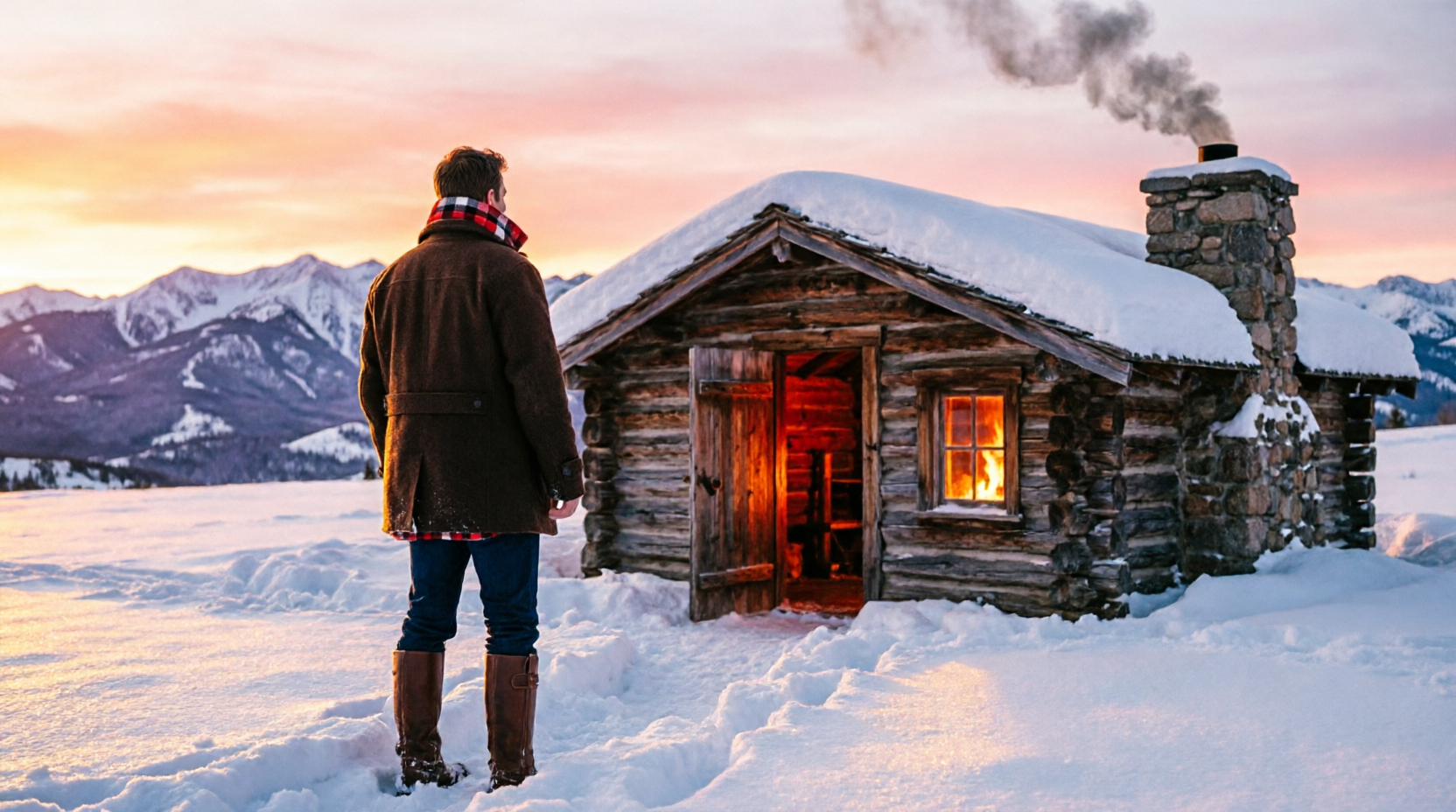
They Abandoned Her in a North Dakota Blizzard, But the Hidden Homestead She Built Became the Town’s Last Hope When the Power Died
They waited until the thermometer on the porch read twenty-two below before they threw sixteen-year-old Lily Mercer out.
Her aunt shoved one boot into the snow after her and said, “You can freeze before you steal another thing from this family.”
Her uncle stood behind the screen door with Lily’s mother’s quilt in his arms, smiling like he had just solved a business problem.
Lily did not scream.
She did not grab the doorframe.
She did not beg people who had already decided her life was worth less than a missing silver bracelet she had never touched.
She did not beg when Aunt Carla tossed her backpack into a drift.
She did not beg when Uncle Dennis locked the deadbolt.
She did not beg when her little cousin Madison peeked through the curtain, pale and silent.
She did not beg when the porch light went off.
She did not beg when the North Dakota wind hit her face so hard it stole the breath from her chest.
Lily only bent down, picked up her boot, shook the snow out of it, and put it on.
Then she pulled the hood of her thin coat tight around her ears and looked once at the farmhouse.
Three generations of Mercers had lived there.
Her grandfather had planted the cottonwoods.
Her father had rebuilt the barn after the fire.
Her mother had painted the kitchen yellow because she said every house needed one room that refused to be sad.
Now the windows were dark except for one.
In that upstairs bedroom, behind frosted glass, Lily saw Uncle Dennis move across the room carrying a cardboard box.
Her cardboard box.
The one with her father’s old journals.
The one she had hidden under loose boards in the closet.
That was when Lily understood something colder than the storm.
They had not thrown her out because they believed she stole the bracelet.
They had thrown her out because they had found what her father left behind.
And whatever was inside that box had scared them enough to risk killing a girl in the winter.
Lily turned away from the farmhouse.
Her left glove had a hole in the thumb.
Her jeans were too thin.
Her backpack held two apples, a flashlight with weak batteries, a pocketknife, a school notebook, three dollars and seventy-two cents, and a folded map her father had drawn years before on the back of a feed receipt.
At the top of the map, in his square mechanic’s handwriting, he had written:
If the house ever stops being safe, go where the north wind can’t find you.
Lily had never known what he meant.
Until tonight.
The county road was half buried already.
Snow crossed the ditch in white sheets, moving sideways like the whole world had come loose and was sliding east.
The Mercer farm sat seven miles outside Hawthorne, North Dakota, a town with one grocery store, one high school, two churches, and more abandoned buildings than streetlights.
In summer, the land looked endless.
In winter, it looked like God had erased every landmark with a dirty white rag.
Lily walked with her head down.
She did not walk fast.
Fast meant sweat.
Sweat meant wet clothes.
Wet clothes meant death.
Her father had taught her that when she was nine and they got caught mending fence in a sudden December squall.
“Cold doesn’t kill the loudest person first,” he had said, wrapping her fingers around a thermos lid of coffee. “It kills the careless one.”
So Lily moved carefully.
Step.
Breathe through the scarf.
Step.
Keep fingers moving.
Step.
Check the ditch line.
Step.
Do not cry, because tears freeze.
Behind her, the farmhouse disappeared.
Ahead of her, the road vanished into white.
She could have turned left toward Hawthorne.
Seven miles.
Open road.
No windbreak.
No houses for the first four.
She would be found in the morning by a snowplow driver, blue and curled beside a fence post.
So she did not turn left.
She turned right.
Toward the old railroad grade.
Toward the empty land everyone in town called useless.
Toward a place her father had once pointed to from his truck window and said, “People forget what keeps them alive.”
The wind slammed into her again.
Lily lowered her shoulder and kept going.
After half a mile, her eyelashes were stiff with ice.
After one mile, she stopped feeling the tips of her fingers.
After two miles, the beam of her flashlight shrank to a yellow smudge.
Then the battery died.
Darkness swallowed the road.
Lily stood still and listened.
Wind.
Fence wire humming.
Loose snow rattling over hard crust.
Somewhere far away, a coyote yipped once and went quiet.
She reached into her pocket and touched the folded map.
Her father’s map.
Three marks.
A broken windmill.
A double cottonwood.
A stone chimney.
She could not see any of them.
But she remembered his words.
“When you’re lost on flat land, don’t look for what’s tall. Look for what interrupts the wind.”
Lily crouched.
The wind drove snow over her back.
She ran one gloved hand along the ground until she found the packed rise of the old railroad grade beneath the drift.
It ran northeast.
The map said northeast.
So Lily followed it.
By the time she saw the broken windmill, she had stopped shivering.
That scared her more than the dark.
She forced herself to slap her thighs.
Once.
Twice.
Hard enough to hurt.
Pain meant she was still in her body.
The windmill leaned against the sky like a broken rib.
One blade creaked in slow circles.
Behind it, half hidden by snow and brush, stood a line of cottonwoods bent permanently east.
Lily stumbled toward them.
Branches scratched at her coat.
A rusted length of barbed wire caught her jeans and tore the knee open.
She did not stop.
Beyond the cottonwoods, the wind changed.
Not gone.
Never gone.
But softened.
Blocked.
Cut into pieces.
Lily breathed once without pain.
Then she saw the chimney.
It rose from a low mound of snow and dirt, dark stones stacked against the storm.
At first, she thought the house had collapsed.
Then she saw a door.
Not a proper door.
A plank door set sideways into the hill, almost buried by drifts.
A storm cellar door.
Her father’s map had not led to a cabin.
It had led underground.
Lily clawed snow away with both hands.
Her fingers screamed.
She found an iron handle.
It would not move.
She pulled again.
Nothing.
Her breath came short.
The wind pushed at her back as if it had followed her here and wanted the job finished.
Lily stepped back.
Looked.
Thought.
Her father’s voice came back.
“Most doors don’t need strength. They need the right argument.”
She took the pocketknife from her backpack and dug around the base of the door.
Ice had sealed the lower edge.
She chipped until the blade bent.
Then she found a flat stone under the snow and used it like a hammer.
One crack.
Another.
Another.
The ice gave with a sound like a bone snapping.
Lily pulled.
The door opened six inches.
A black gap breathed earth-smell and old wood into her face.
She slid inside, dragging her backpack behind her.
The door fell shut.
The dark was complete.
For a minute, Lily lay on a dirt floor and listened to herself breathe.
No wind.
That was enough.
No wind was a miracle.
She fumbled for her matches.
Three in a matchbook from Earl’s Diner.
She struck the first.
It broke.
She struck the second.
It flared.
The tiny flame showed stone walls, a low ceiling braced with beams, old shelves, a potbelly stove, a stack of split wood, and a metal cot folded against the wall.
It also showed writing carved above the stove.
MERCER HOLDFAST — 1931
Lily stared until the match burned her finger.
She dropped it and hissed.
Darkness returned.
Her grandfather had never mentioned this place.
Her aunt and uncle had never mentioned it.
No one had.
But somebody had kept it ready.
Not clean.
Not warm.
But ready.
Lily struck the last match and moved fast.
Paper.
Kindling.
Stove door.
Draft.
Her hands shook now, which was good.
Shaking meant her body had changed its mind about dying.
The fire caught slowly.
A thin orange tongue licked the paper.
Then the kindling snapped.
Then one split log began to glow at the edge.
Light filled the underground room.
Lily saw more.
A hand pump in the corner.
A crate of mason jars.
A rusted lantern.
Two wool blankets sealed in a tin trunk.
A shelf of old tools.
A coffee can full of nails.
A Bible wrapped in oilcloth.
And on the wall beside the cot, a photograph in a cracked wooden frame.
A young man stood in front of the same stone chimney, smiling into the sun.
He had Lily’s eyes.
Not her father.
Her grandfather.
Maybe younger.
Maybe before the farm.
On the back of the photograph, written in pencil, were four words:
For the ones turned out.
Lily sat down on the dirt floor.
Only then did she let one tear fall.
Just one.
It slid down her cheek and cooled fast.
She wiped it away with her sleeve.
“Okay,” she whispered.
Her voice sounded strange in the stone room.
Small.
Alive.
“Okay.”
That was the night Lily Mercer stopped being a girl waiting for adults to save her.
By morning, the storm had buried the cellar door completely.
If she had not tied one end of an old clothesline to the inside latch and run the other to a beam, she might have panicked.
Instead, she worked.
She melted snow in a dented pot.
She cut the bad spots from one apple and ate slowly.
She wrapped her feet in strips torn from an old flour sack before putting her socks back on.
She found a broom and cleared ash from the stove.
She checked the chimney draw.
She counted the wood.
Enough for two days if she was careless.
Five days if she was not.
On the second day, the storm eased.
Lily dug her way out.
The world above was white and brutal bright.
The Mercer farmhouse could not be seen from the holdfast.
Neither could the road.
The cottonwoods hid the entrance from almost every angle.
Smart.
Whoever built it had understood shame, weather, and people.
Lily spent that day learning the land.
The holdfast sat inside a shallow draw below the old railroad grade.
The stone chimney was the only visible sign, and even that looked like a ruin.
Thirty yards east stood a collapsed shed.
Under the collapsed roof she found rusted hinges, two sheets of tin, a cracked window frame, and a shovel with half a handle.
South of the cottonwoods, she found a dry creek bed packed with snow.
North, an old fence line.
West, a half-buried sign that read:
MERCER RELIEF STATION NO. 4
The words made no sense.
Relief station.
Number four.
How many had there been?
Who had needed relief out here?
She brushed snow from the sign with her sleeve.
Beneath the name, smaller letters appeared.
WINTER ROUTE — KEEP STOCKED
Lily stood there, breathing clouds into the air.
People forget what keeps them alive.
Her father had not been talking about a place.
He had been talking about a promise.
By the fourth day, her stomach cramped from hunger.
She had finished the apples.
The mason jars held old pickled beets, cloudy but sealed.
She ate them anyway.
Her mouth tasted like vinegar and earth.
She made herself stop after half a jar.
Food had to stretch.
On the fifth day, she walked to Hawthorne.
Not on the road.
Through the railroad grade and shelterbelts, like her father had taught her.
By then, Aunt Carla and Uncle Dennis would have told people she ran away.
They would sound worried.
They would shake their heads.
They would say Lily had been troubled since her father died.
They would say she had taken jewelry.
They would say they tried.
People believed adults with clean kitchens and Sunday voices.
They did not believe girls in torn jeans.
So Lily did not go to the sheriff first.
She went to the library.
Hawthorne Public Library occupied two rooms behind City Hall.
The heat inside hit Lily so suddenly she almost swayed.
Mrs. Nora Bell looked up from the desk.
She was seventy-one, with white hair braided down her back and glasses on a chain.
Her eyes moved over Lily’s cracked lips, windburned cheeks, torn jeans, and too-thin coat.
Then they moved to the door behind her.
No one.
Nora did not gasp.
She did not ask loudly what happened.
She stood, locked the library door, turned the sign to CLOSED, and said, “Bathroom is left. Towels in the cabinet. I’ll make soup.”
Lily could have cried then.
She did not.
She nodded once and went to wash her hands.
The water turned gray in the sink.
When she came out, Nora had set a bowl of chicken noodle soup on the reading table beside two slices of buttered toast.
Lily ate with both hands wrapped around the spoon.
Nora sat across from her and waited.
That was why Lily trusted her.
People who wanted gossip filled silence.
People who wanted truth protected it.
After the bowl was empty, Nora said, “Your aunt came in yesterday.”
Lily looked up.
“Said you stole her bracelet and ran off with a boy from Minot.”
Lily’s face did not change, but the spoon bent slightly in her hand.
Nora noticed.
“She also asked for old county property maps,” Nora said. “Specifically the railroad relief parcels.”
Lily set the spoon down.
“What did you tell her?”
“That the county digitized them years ago and the paper copies were lost in the basement flood.”
“Were they?”
Nora’s mouth curved.
“Child, I have worked in this building since 1978. Nothing is lost unless I want it lost.”
Lily leaned back slowly.
Nora rose, walked to a locked cabinet, and took out a flat blue folder.
She placed it on the table.
Inside were copies of survey maps, handwritten notes, and one yellowed page stamped BURKE COUNTY LAND OFFICE.
Lily scanned the page.
Her father had taught her to read contracts before he taught her to drive.
“Mercer Relief Stations,” she said. “Established during the winter of 1931.”
Nora nodded.
“Blizzard year. Folks got caught between farms and towns. Some died within sight of shelter because there was no shelter.”
Lily read the parcel list.
Station No. 1.
Station No. 2.
Station No. 3.
Station No. 4.
Her finger stopped.
Owner of record:
ELIAS MERCER HOLDFAST TRUST.
Beneficiary line:
SURVIVING DESCENDANT OF JONAH MERCER THROUGH DANIEL MERCER.
Lily’s father.
Daniel.
Her breath slowed.
Nora watched her.
“Did you know?” Nora asked.
“No.”
“Does your uncle know?”
Lily remembered Uncle Dennis carrying the cardboard box.
“He knows something.”
Nora tapped the map.
“Then be careful. Land records like this don’t matter until somebody wants the land.”
“Who wants it?”
Nora hesitated.
Outside, a snowplow scraped Main Street.
“Northern Plains Resilience Project,” she said.
“That sounds fake.”
“It sounds expensive,” Nora replied. “Wind turbines, battery storage, emergency grid modernization. County commissioners have been whispering about it for months. Most folks only heard the pretty version.”
“And the ugly version?”
“They need continuous access across old parcels. Easements. Utility corridors. Some landowners get paid. Some get pressured.”
Lily looked down at Station No. 4.
“My father’s name was in his journals,” she said. “Aunt Carla and Uncle Dennis found them.”
Nora folded her hands.
“You need a safe place tonight.”
“I have one.”
Nora studied her face.
“Not the Mercer farm.”
“No.”
“Tell me where.”
Lily said nothing.
Nora’s expression softened, but she did not push.
“Good,” she said. “A secret kept you alive once. Let’s not spend it too fast.”
That afternoon, Nora gave Lily a canvas grocery bag filled with canned soup, crackers, a flashlight, batteries, wool socks, a sewing kit, and three books.
One was about winter homesteading.
One was about small-engine repair.
One was a North Dakota legal aid booklet.
Lily tried to refuse some of it.
Nora gave her a look that could stop traffic.
“Pride is heavy,” she said. “Food is useful. Choose useful.”
Lily took the bag.
At the door, Nora touched her sleeve.
“Your father came here two weeks before he died.”
Lily went still.
“He left an envelope,” Nora said. “Told me to give it to you if you ever came in alone and looked like you had nowhere else to go.”
The room seemed to tilt.
Nora opened the desk drawer and took out a cream envelope.
On the front, in Daniel Mercer’s handwriting:
For Lily. When the weather turns.
Lily held it but did not open it.
Not there.
Not yet.
She tucked it inside her coat and walked back into the cold.
The first time Uncle Dennis came looking for her, Lily saw him before he saw the holdfast.
She had been repairing the shed roof with salvaged tin when she heard an engine on the railroad grade.
She dropped flat behind the collapsed wall.
Dennis’s black pickup crawled along the ridge.
Aunt Carla sat beside him.
Their windows were up.
Their faces were tense.
The truck stopped near the broken windmill.
Dennis got out.
He was a tall man with a soft belly, good boots, and hands that never seemed to stay dirty long.
He turned in a slow circle.
“Lily!” he shouted.
His voice carried across the snow.
“Come on out! We’re not mad anymore!”
Aunt Carla stepped out too, wrapped in a red parka Lily’s mother had once worn.
That made Lily’s jaw tighten.
Carla cupped her hands.
“Sweetheart, you’re in trouble! People are asking questions!”
Sweetheart.
The word floated over the draw like poison with sugar stirred in.
Dennis walked toward the cottonwoods.
Lily’s hand closed around the hammer.
Not to fight.
To stay still.
Dennis stopped ten yards from the entrance.
He looked at the chimney.
Then at the snow.
Then at the cottonwoods.
His face changed.
Recognition.
Not discovery.
Recognition.
He had been here before.
Aunt Carla called, “Dennis?”
He snapped, “Stay by the truck.”
Lily watched him brush snow from the old sign.
Mercer Relief Station No. 4.
He stared at it for a long time.
Then he took out his phone and photographed it.
Before he left, he did something Lily did not expect.
He kicked snow over the cellar door area.
Not enough to bury it.
Enough to hide footprints.
Enough to make sure Aunt Carla did not see.
That told Lily two things.
Her aunt did not know everything.
And her uncle knew too much.
That night, Lily opened her father’s envelope by stove light.
Inside was a letter, a key taped to an index card, and a folded bank receipt.
Lily,
If you’re reading this, I failed to make the farm safe before you needed the holdfast.
I am sorry.
That sentence hurt more than the cold ever had.
She put the letter down.
Fed the stove.
Picked it up again.
Your great-great-grandfather Jonah helped build the relief stations after the winter of 1931. Station No. 4 stayed in our line because it has something the others did not: water, stone, and a draw that breaks north wind.
It is not much, but not much can be enough.
Do not tell Carla or Dennis about the trust until you have help.
Dennis has debts he hides with favors. Carla has anger she calls concern. Neither of them understands that land is not just money.
In the metal box under the east shelf, there are copies of what matters.
If anyone tries to scare you off, document everything.
If I’m gone and you are alone, remember this:
You are a Mercer.
You do not have to be loud to be strong.
You do not have to be cruel to win.
You do not have to stay where people only love you when you are useful.
Build the place.
Keep it stocked.
Someone will need it again.
Lily sat with the letter on her knees until the fire burned low.
Then she moved the east shelf.
Behind it, set into the dirt wall, was a small rusted metal box.
The key fit.
Inside were copies of the land trust, old photographs, a hand-drawn diagram of the holdfast, and a list labeled WINTER STOCK ROTATION.
There was also a ledger.
Names.
Dates.
Supplies.
Families sheltered.
Babies born.
Livestock saved.
Travelers found.
The last entry before the pages went blank was from 1979.
Blizzard took Haskins boy by the rail cut. Station empty. No wood. No one assigned.
Below that, in different handwriting:
Never again.
Lily traced the words.
Never again.
By the end of January, Lily had turned the holdfast from a hiding place into a home.
Not a pretty home.
Not the kind shown on HGTV with white cabinets and a woman smiling over granite countertops.
A real home.
The kind that kept breath in lungs.
She patched the cellar door with tin.
She lined the inside with old feed sacks stuffed with dry grass.
She dug a second vent behind the chimney so the stove drew cleaner.
She set three coffee cans under drip points and marked them with charcoal.
She built shelves from shed boards.
She hung the wool blankets across one corner to make a sleeping space.
She rigged a reflector behind the stove from flattened cans.
She carried stones from the creek bed and stacked them along the interior wall, letting them hold heat after the fire burned low.
She found the old hand pump worked after she thawed the pipe with warm rags.
The water came up rusty at first.
Then clear.
She laughed when it cleared.
A short laugh.
Surprised.
Almost angry.
The land had not been useless.
People had just stopped asking it the right questions.
Every few days, Lily walked into town.
Never on the same route twice.
She went to the library.
Sometimes Nora had food.
Sometimes she had information.
Sometimes she only had a warm chair and silence.
Lily also went behind Earl’s Diner, where the owner, Earl Boone, pretended not to see her take day-old rolls from a crate he began leaving beside the back door.
One morning, he stepped outside while she was tying the bread bag.
“Trash pickup’s Thursday,” he said.
Lily froze.
Earl lit a cigarette, though he never seemed to smoke more than half.
“Be a shame if raccoons got those rolls first.”
Lily looked at him.
He looked at the alley.
“Also,” he said, “somebody left a busted Coleman lantern by the dumpster. Probably junk.”
Then he went back inside.
The lantern needed a new gasket.
Lily made one from rubber cut off an old inner tube.
Mini-payoff.
Light at night without draining batteries.
At the hardware store, she used Nora’s old library card as ID and bought nails, lamp wicks, and two cans of beans.
The cashier, a narrow-faced woman named Patty Sloane, stared at her coat.
“That your aunt’s coat?”
“My father’s,” Lily said.
“It’s too big.”
“It’s warm.”
Patty leaned closer.
“Your aunt says you’re making poor choices.”
Lily placed exact change on the counter.
“My aunt says many things.”
Patty’s eyes sharpened.
Lily took her receipt.
Receipts mattered.
Her father had taught her that too.
By February, Hawthorne had chosen sides without admitting there were sides.
Some people believed Carla.
Some believed Lily.
Most believed whatever required the least courage.
At school, Lily became a rumor with boots.
She showed up for first period after missing two weeks.
Her hair was braided tight.
Her cheeks were still windburned.
She carried a backpack repaired with wire and black tape.
When she stepped into American History, the room went quiet.
Mr. Vale stopped writing on the board.
“Lily,” he said, too carefully. “Good to see you.”
Madison, her cousin, sat in the third row.
She looked down at her notebook.
Two girls whispered.
A boy near the window muttered, “Runaway.”
Lily heard him.
She took her seat.
Opened her notebook.
Wrote the date.
No reaction.
That bothered people more than tears would have.
At lunch, the principal called her to the office.
Aunt Carla was waiting there.
She wore soft beige gloves and a wounded expression.
Uncle Dennis stood behind her.
Principal Harris sat at his desk, uncomfortable.
“Lily,” Carla said, rising. “Honey, enough.”
Lily remained standing by the door.
Carla’s eyes shone.
Fake tears always sat too neatly.
“We are not angry,” Carla said. “We just want you home.”
“Home,” Lily repeated.
Dennis’s mouth tightened.
Principal Harris cleared his throat.
“There have been allegations,” he said, “and concerns about your welfare.”
“Whose allegations?” Lily asked.
Harris looked pained.
“Your aunt and uncle are your legal guardians.”
“Temporary guardians,” Lily said. “Filed after my father’s accident. Not permanent.”
Dennis stepped forward.
“You don’t know what you’re talking about.”
Lily opened her backpack.
Took out a copied document from Nora’s legal aid booklet packet.
Placed it on the desk.
“I know guardianship doesn’t give them the right to take my father’s papers, accuse me of theft without proof, or lock me outside during a blizzard.”
Carla’s face twitched.
Dennis laughed once.
“She’s always been dramatic.”
Lily looked at Principal Harris.
“Check my attendance records. Check the night of January 9th. Ask them what time they reported me missing.”
Silence.
Harris looked at Carla.
Carla pressed a hand to her chest.
“We were terrified.”
“What time?” Lily asked.
Dennis said, “This is ridiculous.”
“What time?” Lily repeated.
Harris typed on his computer.
The clicking sounded very loud.
His face changed slightly.
Lily saw it.
Mini-payoff.
A record.
Something official.
“There’s no report from that night,” Harris said.
Carla’s voice sharpened. “We thought she went to a friend’s.”
“At twenty-two below?” Lily asked.
Harris stopped typing.
Dennis’s eyes went flat.
For the first time, Lily saw the man behind the uncle.
Not loud.
Not stupid.
Dangerous because he did not waste motion.
He leaned toward her and spoke softly.
“You are making this harder than it needs to be.”
Lily met his eyes.
“No,” she said. “You are.”
Carla flinched as if Lily had slapped her.
Dennis smiled.
That smile meant he had decided something.
Two days later, the county posted a notice on the holdfast door.
UNSAFE STRUCTURE.
VACATE IMMEDIATELY.
Lily found it nailed to the plank door with a bright orange tag that snapped in the wind.
She read every line.
County Code.
Hazard.
Unauthorized occupancy.
Failure to comply.
Signed by Commissioner Wade Trumbull.
Lily knew that name.
Wade Trumbull owned three grain elevators, half a strip mall, and a smile he wore mostly in election years.
He also played poker with Uncle Dennis.
Lily took a photograph of the notice with the cheap prepaid phone Nora had given her.
Then she removed the nail carefully and saved it.
Evidence was not only paper.
Evidence was patterns.
The next morning, Lily went to the county office.
Not alone.
Nora came with her.
So did Earl, smelling faintly of coffee and fryer oil.
And June Calloway, a retired nurse who had once delivered two babies during a whiteout in a church basement and considered foolish men a chronic disease.
Commissioner Trumbull looked annoyed when Lily walked into the meeting room.
He looked less annoyed when he saw the adults behind her.
“Miss Mercer,” he said, folding his hands. “This is not personal.”
“That’s usually what people say when they want to do something personal without being blamed for it,” June said.
Earl coughed to hide a laugh.
Lily set the orange notice on the table.
“What inspection was performed?”
Trumbull blinked.
“The property was deemed—”
“By whom?”
He glanced at his papers.
“The county has authority to—”
“What date did the inspector visit?”
His jaw tightened.
Lily waited.
Nora stood behind her with her purse over one arm like a quiet judge.
Trumbull shuffled documents.
“I don’t have that information in front of me.”
Lily placed photographs on the table.
The patched door.
The chimney.
The stove pipe.
The water pump.
The interior beams.
“Then you posted a vacate notice without inspection.”
Trumbull’s face reddened.
“That structure is not approved for residential—”
“It’s registered as a historical emergency relief station under county archive records,” Lily said. “Not a residence. Not abandoned. Maintained under private trust.”
Trumbull looked up sharply.
There it was.
Recognition again.
Too fast.
He knew.
Lily filed that away.
Nora slid a copy of the trust across the table.
“We’ll need the county to withdraw the notice by end of business,” she said. “Or we’ll ask the state historical office why emergency shelter infrastructure is being condemned without inspection during winter.”
Trumbull’s cheek pulsed.
Earl leaned in.
“And I’ll put a sign by the register at the diner. Folks love reading while they wait for pancakes.”
The notice was withdrawn at 4:37 p.m.
Mini-payoff.
One orange paper defeated by one blue folder.
That night, Lily made a new entry in the ledger.
- Station No. 4 reopened. Notice withdrawn. Stock low. Trust active.
Then she added:
Never again means paperwork too.
By March, Hawthorne began to thaw at the edges.
The snowbanks turned gray.
The roads broke into muddy ruts.
People came out of winter meaner and softer at the same time.
Lily kept building.
She salvaged windows from a demolished chicken coop.
She traded Earl two weekends of dishwashing for a cast-iron Dutch oven.
She helped June clean her garage and received three sleeping bags, a box of bandages, and a battery-powered weather radio.
She fixed Mr. Albright’s snowblower and he gave her plywood.
She patched the roof of the shed and turned it into a wood store.
She planted reflective markers along a hidden path from the rail grade to the holdfast, using old license plates cut into strips.
From a distance, they looked like junk.
In a storm, they shone like small promises.
Madison came in April.
Lily was splitting kindling outside when she heard footsteps on wet snow.
She turned.
Her cousin stood beyond the cottonwoods in a pink winter coat, holding a grocery sack.
Madison was fifteen, but she looked younger that day.
Afraid makes people small.
“You followed me,” Lily said.
Madison swallowed.
“I followed Aunt Carla once. Then I followed you.”
Lily set down the hatchet.
Madison held out the bag.
“Canned peaches. Peanut butter. And batteries.”
Lily did not take it yet.
“Why?”
Madison’s eyes filled.
“Because I didn’t say anything.”
The wind moved through the cottonwoods.
Lily looked at her cousin’s bare ankles above fashion boots.
“Come inside before you get frostbite trying to apologize.”
Madison blinked.
Then she followed.
Inside, Madison stared at the stone walls, the stove, the shelves, the cot, the neat rows of supplies.
“You live here?”
“I work here,” Lily said.
“That’s not an answer.”
“It’s the answer I have.”
Madison sat on the edge of the cot.
“Mom said you’re sick.”
Lily opened the peaches and poured them into two tin cups.
“What do you think?”
Madison looked around.
“I think she’s scared of you.”
Lily handed her a cup.
“Good.”
Madison let out a shaky laugh and then covered her mouth.
For a few minutes they ate peaches in silence.
Then Madison whispered, “Dad has meetings in the barn.”
Lily stayed still.
“With Commissioner Trumbull,” Madison said. “And a woman with a white truck. She wears those city boots with fur on them but never gets them dirty.”
“Northern Plains?”
“I don’t know. I heard ‘corridor.’ And ‘minor heir.’ And Dad said something about if you can’t be found, signatures get easier.”
Lily’s hand tightened around the tin cup.
Madison watched her face.
“I’m sorry,” she whispered.
Lily put the cup down.
“Did they know you came?”
“No.”
“Then you leave before dark. You never come the same way twice. You never bring your phone if they track it. And Madison?”
Her cousin looked up.
“You do not become brave all at once. You become brave by doing the next useful thing.”
Madison nodded.
She cried quietly then.
Lily let her.
Some people cried to be rescued.
Some cried because they had finally stopped lying to themselves.
There was a difference.
Spring did not make Lily safe.
It only made danger easier to drive through.
In May, someone cut the hand pump handle off.
Lily found it lying in the mud ten feet away.
Not stolen.
Just cut.
A message.
She carried water from the creek until Mr. Albright welded the handle back on.
He did not ask who did it.
He only said, “Next time, bring me the pipe before noon. My hands shake after lunch.”
In June, two men from an insurance company photographed the holdfast from the ridge.
Lily photographed them back.
They left.
In July, Aunt Carla appeared at the library with a church deacon and a story about reconciliation.
Lily listened.
Nora listened.
The deacon listened.
Carla dabbed her eyes with tissue.
“I raised that girl like my own,” she said.
Nora said, “No, you didn’t.”
The deacon coughed.
Carla looked stunned.
Nora removed her glasses.
“I knew her mother,” she said. “I knew her father. And I know the difference between sheltering a child and storing one until paperwork clears.”
Carla stood so fast her chair scraped the floor.
Lily said nothing.
Mini-payoff.
Some truths sound better when someone else says them.
By August, Lily had passed her driver’s test using Earl’s old pickup.
By September, she had petitioned the court to review her guardianship.
Legal aid took the case after Nora sent copies of the school incident, the vacate notice, the trust documents, and Lily’s written timeline.
Uncle Dennis did not explode.
That worried Lily.
He became polite.
He began waving from his truck.
He told people he wanted peace.
He gave the sheriff a sad smile outside the courthouse.
“He’s a child,” he said once when he thought Lily could not hear. “Children get confused.”
Lily wrote that down.
Date.
Time.
Witness.
Everything.
On October 3rd, Judge Marianne Holt suspended Carla and Dennis’s guardianship pending review.
Lily did not cheer.
She walked out of the courthouse between Nora and her legal aid attorney, holding the signed order in a folder against her chest.
Across the street, Dennis leaned against his pickup.
He lifted two fingers in a wave.
His face was calm.
Too calm.
Carla sat in the passenger seat, sunglasses on, mouth tight.
Madison was not with them.
That night, Lily checked every latch twice.
In November, the first serious cold came early.
Hawthorne people complained like they had never met winter before.
Farmers checked generators.
Schools sent reminder emails.
The grocery store sold out of milk, bread, propane, and cheap coffee.
At the holdfast, Lily stocked wood until the shed walls bulged.
She rotated canned food by date.
She made a map of the nearest elderly residents and taped it above the shelf.
She marked three emergency routes into town.
She put extra socks into labeled bins.
She tested the weather radio every Sunday night.
She repaired two old sleds, not for fun, but for hauling supplies.
Nora brought books.
Earl brought flour.
June brought medical supplies and a blood pressure cuff.
Mr. Albright brought a hand-crank siren from the firehouse basement and said, “Don’t ask.”
By December, Station No. 4 had become something people joked about until they needed it.
“Lily’s bunker,” the boys at school called it.
“The Hobbit hole,” Patty from the hardware store said.
But when the school bus got stuck near County Road 12 during a fast squall, Lily was the one who knew the closest windbreak.
When June’s furnace died at midnight, Lily had a safe kerosene heater and knew how to vent it.
When Earl’s delivery truck slid into a ditch, Lily and Mr. Albright got him out with a come-along and fence posts before the tow truck even answered.
Mini-payoffs.
Small rescues.
Small proof.
A shelter is not built in one heroic moment.
It is built every time someone says, “Just in case,” and means it.
The big storm came on January 9th.
Exactly one year after Lily had been thrown out.
The forecast called it a historic polar outbreak.
People in Hawthorne had heard that before.
They bought groceries, grumbled, and went on.
By noon, the sky had the color of a bruise.
By three, the wind was moving loose snow off the fields in long white ropes.
By four, school dismissed early.
By five, the temperature had fallen thirty degrees.
By six, the power flickered once.
Then twice.
At 6:17 p.m., Hawthorne went dark.
Lily was at the holdfast when the lights of town vanished beyond the ridge.
Not dimmed.
Vanished.
The weather radio crackled.
Emergency alert.
Blizzard warning.
Travel impossible.
Wind chills life-threatening.
Power restoration unknown.
Then the radio cut to static.
Lily stood beside the stove.
Listened.
The fire popped.
The stone walls held steady.
Outside, the wind came down like a train.
She took the map from the wall.
Checked the routes.
Then the hand-crank siren wailed from town.
Once.
Twice.
Cut short.
Lily grabbed her coat.
Nora had told her once that people die in groups when systems fail.
Not because no one cares.
Because everyone assumes someone else knows what to do.
Lily knew what to do.
She loaded the sled with blankets, a thermos, rope, flares, and the medical kit.
Then she tied a rope around her waist and clipped the other end to the guide line she had strung along the cottonwoods.
Step.
Breathe.
Step.
Check the markers.
Step.
Do not rush.
Halfway to town, she found the first car.
A sedan nose-down in the ditch, hazard lights blinking weakly under snow.
Inside were Patty Sloane and her eight-year-old grandson, Mason.
Patty’s face changed when she saw Lily through the frosted window.
Shame.
Relief.
Fear.
All useless in that order.
Lily opened the door against the wind.
“Can you walk?”
Patty nodded too fast.
“My grandson—”
“I asked if you can walk.”
“Yes.”
“Good. Put his mittens on. Not those thin ones. The ones on the floor.”
Patty obeyed.
Lily wrapped Mason in a blanket and tied him to the sled.
“Where are we going?” Patty shouted.
“Somewhere the wind can’t find us.”
Patty looked like she wanted to say something.
The wind slapped the words away.
They reached the holdfast twenty minutes later.
Patty stepped inside and froze.
Not from cold.
From recognition of what she had mocked.
Stone walls.
Stove heat.
Lantern light.
Shelves stocked.
Dry blankets.
Water.
A place ready.
Lily pointed to the cot.
“Mason there. Boots off. Socks by the stove, not too close.”
Patty did exactly as told.
When Lily turned to leave again, Patty grabbed her sleeve.
“You can’t go back out.”
Lily looked at her hand.
Patty let go.
“There are more people out there,” Lily said.
She went back.
The second rescue was an elderly man from the edge of town whose oxygen machine had stopped with the power.
June met Lily halfway, dragging a tank on a child’s plastic sled.
Together they got him inside.
The third was a young mother with a baby and a toddler wrapped in a quilt.
The fourth was Earl, cursing through blue lips because he had tried to check on the diner freezer.
The fifth was Mr. Vale from school, with blood on his forehead and one lens missing from his glasses.
By 9 p.m., the holdfast held fourteen people.
By 10 p.m., twenty-two.
By midnight, thirty-one.
The room smelled like wet wool, smoke, fear, and soup.
Lily controlled it like a captain on a sinking ship who had already memorized the exits.
“Wet coats on the east line.”
“Kids near the back wall.”
“No one blocks the door.”
“Small sips.”
“Do not sleep with your boots on.”
“Write names on the clipboard.”
“June, check fingers and toes.”
“Earl, stove duty.”
“Mr. Vale, keep the children counting by fives.”
People obeyed because panic likes a voice with edges.
At 1:13 a.m., the door banged open and Sheriff Mark Henson ducked inside, face covered in ice.
Behind him came Principal Harris, two teenage boys, and a woman Lily had seen once from a distance.
White parka.
Fur-trimmed city boots.
Clean even in disaster.
Madison had described her.
The woman looked around the holdfast, eyes sharp despite the cold.
Not afraid.
Calculating.
Sheriff Henson lowered his scarf.
“Lily,” he said, breathing hard. “We’ve got a school bus missing.”
The room went still.
Lily’s stomach tightened.
“How many?”
“Driver and nine kids. They left the high school before the outage. Never reached South Ridge.”
Principal Harris looked sick.
“Phones are dead,” he said. “Radio tower’s down.”
Lily turned to the map.
“Which bus?”
“Route 7,” Harris said.
Lily knew Route 7.
Open fields.
Bad curve by the old grain bins.
A low spot where drifts formed fast.
She pointed.
“They’re not on South Ridge. They’re here.”
Sheriff Henson stepped closer.
“How do you know?”
“Because Mrs. Kline drives that route. She hates the hill by the Jensen place. In whiteout, she’d take the lower road thinking it’s safer. It isn’t.”
The sheriff stared at the map.
The woman in the white parka said, “That road is impassable.”
Lily glanced at her.
“And children are still children when roads are inconvenient.”
A few people looked up.
The woman’s mouth closed.
Sheriff Henson said, “Can you guide us?”
Nora, sitting with a blanket around her shoulders, said, “She is sixteen.”
Lily looked at her.
Nora looked back.
The room held the whole argument between them without words.
Then Nora closed her eyes briefly.
“Take Earl,” Nora said. “And the long rope.”
Earl stood.
“Hell yes.”
June said, “Language.”
Earl said, “Sorry. Heck yes.”
The children laughed.
Small laughter in a storm can keep people from breaking.
Lily put on dry socks, then boots.
She took the flare gun from the shelf.
The sheriff looked at it.
“Where’d you get that?”
“History,” Lily said.
Outside, the wind erased them five feet from the door.
Lily tied herself to the rope line.
The sheriff tied behind her.
Earl behind him.
Mr. Vale insisted on coming and tied last, despite the bandage on his head.
They moved like one animal across the white dark.
Lily counted steps.
Fence post.
Dip.
Marker.
Turn.
She could not see the world.
So she used the world under her boots.
Hard ridge.
Soft drift.
Gravel.
Frozen rut.
At the old rail cut, she stopped and raised one hand.
Everyone stopped.
Through the wind, faint and wrong, came a sound.
Not a horn.
Not a shout.
Metal tapping.
Three taps.
Pause.
Three taps.
Pause.
Lily turned toward it.
The bus lay tilted in the ditch, half buried, yellow paint crusted white.
Its windows were dark except for one faint glow near the front.
Mrs. Kline, the driver, was conscious but trapped by the bent steering column.
Nine children huddled in the aisle.
One had asthma.
One had lost a boot.
One was silent in a way Lily did not like.
The sheriff tried the radio.
Dead.
Earl worked on the emergency door, but ice sealed it.
Lily climbed through a broken side window after knocking the remaining glass clear with the hatchet.
Inside, the children stared at her like she had crawled out of the storm itself.
One whispered, “Are we dead?”
Lily pulled off her scarf and wrapped it around the child with the missing boot.
“No,” she said. “Dead people don’t have this much paperwork.”
A boy laughed.
Then cried.
She moved quickly.
Asthma inhaler.
Blankets.
Check Mrs. Kline.
Cut seatbelts.
Count.
Names.
The silent child was a girl named Ava with skin too pale and fingers stiff.
Lily tucked Ava inside her own coat while Earl and the sheriff freed Mrs. Kline.
It took forty minutes to get everyone out.
Forty minutes in that cold felt like negotiating with a gun held to every head.
On the walk back, Lily carried Ava against her chest.
The girl’s breath was shallow.
“Stay with me,” Lily said into the child’s hat.
Ava did not answer.
“Count with me.”
Nothing.
Lily bent her head against the wind.
“One fence post.”
Step.
“Two fence posts.”
Step.
“Three fence posts.”
Ava stirred.
“Four,” she whispered.
Lily felt something fierce and hot rise in her throat.
“That’s right,” she said. “Four.”
By the time they reached the holdfast, everyone inside was standing.
Parents surged forward.
June shouted order into chaos.
Kids were stripped of wet layers, wrapped, checked, warmed.
Mrs. Kline was laid on the cot.
Ava’s mother fell to her knees and pressed her face to Lily’s sleeve.
Lily gently pulled free.
“Not yet,” she said. “Help June.”
The mother blinked.
Then nodded.
Useful.
Choose useful.
At 3:40 a.m., the holdfast held forty-six people.
At 4:15, the woman in the white parka tried to leave.
Lily saw her near the door.
Not leaving in panic.
Leaving quietly.
With a leather folder tucked under her coat.
Lily stepped between her and the latch.
“Storm’s bad,” Lily said.
The woman smiled.
“I’ve handled worse.”
“Not in those boots.”
The smile thinned.
Behind them, most people were focused on the rescued children.
The sheriff was outside checking for more stranded cars.
Nora was asleep in a chair.
Earl was feeding the stove.
For the first time all night, Lily and the woman stood almost alone.
“You’re impressive,” the woman said.
“People usually say that when they want me to stop noticing something.”
A tiny pause.
Then the woman laughed softly.
“Dennis said you were difficult.”
Lily’s pulse stayed even.
There it was.
A name.
The woman had given away one thread.
Not the whole sweater.
Lily looked at the folder.
“County business?”
“Private.”
“During a disaster?”
“Especially then.”
The woman leaned closer.
She smelled like expensive perfume under cold air.
“Do you know what this place is worth?”
Lily did not answer.
“Not the dirt,” the woman said. “People like your uncle always think it’s the dirt. It’s never the dirt.”
Lily heard a sound behind her.
Madison.
Her cousin had come in with the last group from town and now stood near the blanket line, eyes wide.
The woman noticed and stopped talking.
Smart.
Too smart.
Lily moved her hand behind her back and made a small gesture.
Madison understood.
She slipped away.
The woman’s eyes returned to Lily.
“You can be compensated,” she said. “Protected. Educated. You don’t have to spend your life playing pioneer in a hole.”
Lily almost smiled.
“You’re offering that at four in the morning while forty people are trying not to freeze?”
“I’m offering reality.”
“Reality has witnesses.”
The woman’s face cooled.
“You have no idea what your father interrupted.”
Lily’s breath stopped for half a second.
The woman saw it.
Regretted it.
Then the door opened behind her and Sheriff Henson stepped in with snow packed into his eyebrows.
“You heading somewhere, Ms. Voss?” he asked.
The woman turned smoothly.
“Just checking the latch.”
Sheriff Henson looked from her to Lily.
Then to the folder under the woman’s coat.
“Hand it over.”
Her eyebrows rose.
“Excuse me?”
“Emergency conditions. Potential county documents. And I’ve had a long night.”
“That is not how warrants work.”
The sheriff smiled without humor.
“No. But that is how obstruction starts.”
For a moment, nobody moved.
Then Madison appeared beside Lily, holding up a phone.
“I recorded her,” Madison said.
Her voice shook.
But she said it.
The woman in the white parka looked at Madison with pure hatred for one bright second.
Then it vanished.
She handed the folder to the sheriff.
Inside were maps.
Not old maps.
New engineering maps.
Station No. 4 was circled in red.
So were three other abandoned relief parcels.
Lines ran between them.
Utility corridor, the maps said.
Battery storage access.
Subsurface thermal survey.
Emergency grid node.
At the bottom of one page was a note in typed text:
MERCER HOLDFAST OBSTRUCTION MUST BE RESOLVED BEFORE FEDERAL REVIEW.
Lily looked at the word obstruction.
Not property.
Not girl.
Obstruction.
That was what she was to them.
A thing in the way.
Then she saw the second page.
A scanned death certificate.
Her father’s.
Daniel Mercer.
Attached was a handwritten note.
Accident classification useful. No reopening without claimant pressure.
Lily felt the room narrow.
The storm outside faded.
The people, the stove, the smell of wet wool, all of it seemed to move far away.
Sheriff Henson read the note.
His face changed.
Nora, awake now, stood slowly.
“Mark,” she said.
The sheriff folded the page.
His voice was low.
“Ms. Voss, sit down.”
The woman sat.
Not because she was defeated.
Because she was already thinking three moves ahead.
Lily knew that look.
She had seen it on Uncle Dennis.
At sunrise, the storm still raged, but the holdfast was alive.
Children slept against their parents.
The stove glowed red.
Soup simmered in the Dutch oven.
People who had mocked the place now moved carefully through it like it was church.
Sheriff Henson had Ms. Voss seated near the back wall with June watching her.
“Don’t make me use my nurse voice,” June told her.
No one doubted June would.
Around 8 a.m., a county snowcat reached the rail grade.
By noon, the first group evacuated.
By evening, the power was still out, but emergency crews had set up at the high school.
By the next morning, the story had spread beyond Hawthorne.
Sixteen-year-old girl shelters dozens in historic blizzard.
Old relief station saves missing school bus.
Mercer Holdfast becomes emergency refuge.
Reporters called.
State officials called.
People who had not answered Lily’s calls for months suddenly wanted quotes.
Lily gave none.
She sat at the holdfast table, writing names into the ledger.
Patty Sloane and Mason.
June Calloway.
Earl Boone.
Nora Bell.
Thomas Vale.
Sheriff Mark Henson.
Bus Route 7.
Nine children.
One driver.
Forty-six sheltered.
No deaths.
Her hand paused over the final line.
No deaths.
She underlined it once.
Mini-payoff.
The kind that mattered.
Three days after the storm, Uncle Dennis was arrested.
Not for murder.
Not yet.
For child endangerment, fraud related to guardianship filings, and suspected evidence tampering.
Aunt Carla was not arrested that day.
She stood on the Mercer farmhouse porch as deputies carried out boxes.
She wore Lily’s mother’s red parka again.
This time Lily did not look away.
Carla saw her from across the yard.
For a second, the older woman’s face collapsed.
Not into guilt.
Into rage.
Because some people are sorriest when the story stops obeying them.
Dennis came out in handcuffs.
He did not shout.
He looked at Lily and smiled that same small, calm smile.
“You think this is the storm?” he said as the deputy guided him past.
The deputy told him to keep moving.
Dennis leaned just enough for Lily to hear.
“This is the warm front.”
Then he was pushed into the cruiser.
The words stayed.
This is the warm front.
Lily wrote them down later.
Date.
Time.
Witness.
Threat.
On the fifth day after the blizzard, the state historical office sent two inspectors.
They expected a relic.
They found a working shelter with labeled supplies, repaired ventilation, water access, a warming plan, and a sixteen-year-old who could explain every improvement without raising her voice.
One inspector, a gray-haired man with a trimmed beard, ran his hand over the carved words above the stove.
MERCER HOLDFAST — 1931.
“This should have been protected years ago,” he said.
Lily said, “It protected itself.”
He looked at her.
Then nodded.
The holdfast received emergency historical status by temporary order.
Northern Plains Resilience Project froze its corridor application pending investigation.
Commissioner Trumbull resigned before anyone asked him to.
Ms. Voss’s company denied wrongdoing in a statement so polished it sounded guilty even to people who wanted to believe it.
Hawthorne began calling Lily a hero.
She hated it.
Hero made it sound like one brave night.
It ignored the cold nights before.
It ignored the torn socks.
It ignored the vinegar beets.
It ignored Nora’s soup, Earl’s rolls, June’s bandages, Madison’s recording, Mr. Albright’s welding, and the dead people in old ledger entries who had taught the living what happens when shelters sit empty.
So when a reporter from Bismarck finally caught Lily outside the library and asked, “How does it feel to be the girl who saved Hawthorne?” Lily looked into the camera and said:
“I reopened a door other people built. That’s all.”
Nora watched the clip three times and cried every time.
By late January, legal aid filed to terminate Carla’s guardianship completely.
The court hearing was set for February 12th.
Lily stayed at the holdfast most nights, though Nora had offered her spare room and June had threatened to make soup until Lily surrendered.
Lily did not stay alone because she trusted the world.
She stayed because she trusted the walls.
On February 1st, Madison came to the holdfast with a black eye.
Lily opened the door and saw it before Madison could speak.
A bruise yellowing at the edge.
A split lip.
No coat.
No gloves.
For one second, Lily’s vision went white.
Then she stepped aside.
“Inside.”
Madison obeyed.
Lily shut the door, dropped the bar, and guided her cousin to the stool by the stove.
“Who?”
Madison stared at the fire.
“Mom.”
Lily knelt in front of her.
“What happened?”
Madison swallowed.
“She found out I recorded Ms. Voss.”
Lily’s hands went very still.
Madison reached into her sweatshirt.
“I took something.”
She pulled out a small flash drive on a key ring.
“My dad kept it taped inside the laundry room vent. I saw him put it there after the deputies searched the barn.”
Lily did not touch it yet.
“What is it?”
“I don’t know. But he told Mom if anything happened to him, she had to get it to a man named Reeve before the hearing.”
The stove popped.
Outside, wind moved through the cottonwoods.
Not a storm wind.
A listening wind.
Lily stood and took the flash drive.
It was warm from Madison’s skin.
“Did anyone follow you?”
“No.”
“Are you sure?”
Madison nodded too quickly.
Lily went to the narrow window beside the door.
At first, she saw only snow, cottonwood trunks, and the gray slope of the draw.
Then, far up on the old railroad grade, headlights blinked once.
Off.
On.
Off.
A signal.
Lily pulled the blanket down over the window.
Madison whispered, “What is it?”
Before Lily could answer, the old hand-crank radio on the shelf crackled.
It had not been turned on.
Static filled the room.
Then a man’s voice came through, low and close.
“Station Four is active. The girl has the drive.”
Madison stopped breathing.
Lily reached slowly for the flare gun hanging beside the stove.
The radio hissed again.
A second voice answered.
“Then open the north wall before she does.”
Lily turned.
The north wall.
The only wall her father’s diagram had not explained.
Behind the stacked firewood, behind the stone, something metal clicked from inside the dark.
Once.
Twice.
Like a lock waking up.