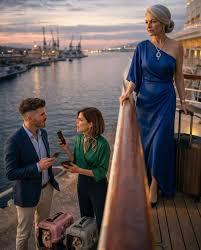
Rodrigo’s voice trembled on the other end of the phone.
“Mom… what do you mean the house is no longer in my name?”
I leaned back in the chair on the deck as the wind moved softly through my hair.
For the first time in decades, nobody was calling me to clean something.
Nobody needed medicine.
Nobody expected dinner at six.
I took a slow sip of coffee before answering.
“It means exactly what it says.”
Silence.
Then I heard Paulina screaming in the background.
“She can’t do this! Tell her she can’t!”
I smiled at the ocean.
Actually, I could.
Three years earlier, after my second surgery for a herniated disc, Armando and I had updated the paperwork for the house. At the time, Rodrigo had pressured his father constantly.
“You should put the property in my name now,” he used to say. “It’ll make things easier later.”
Later.
As if our deaths were just paperwork waiting to happen.
But Armando, despite all his flaws, had one moment of clarity near the end of his life.
One night in the hospital, while Rodrigo complained in the hallway about parking fees, Armando held my hand and whispered:
“They only see us as things now.”
I said nothing.
Because I knew.
A week later, he signed everything back into my name only.
Not Rodrigo’s.
Not shared.
Mine.
And six months before he died, after Paulina casually asked me if I planned to move into “a smaller place for elderly people,” I made another decision.
I created a living trust.
If anything happened to me, the house would be sold, and part of the money would go to animal rescue centers, women’s shelters, and a scholarship fund for older women returning to school.
Rodrigo would receive exactly one dollar.
Enough so he could not contest the will claiming I forgot him.
The lawyer had laughed when I suggested it.
Then he saw my face and stopped laughing.
Back on the phone, Rodrigo’s breathing became heavier.
“You’re being manipulated,” he snapped. “Who’s filling your head with this nonsense?”
“No one,” I replied calmly. “That’s the problem. For the first time in my life, I’m finally thinking for myself.”|
Paulina grabbed the phone.
“Elena, this is cruel! After everything we’ve done for you—”
I almost laughed.
Everything they had done for me?
Like leaving me alone every Christmas to care for Armando while they posted beach photos online?
Like forgetting my birthday three years in a row?
Like treating me as free labor with gray hair?
I looked around the cruise deck.
An older couple danced near the railing while music played softly from hidden speakers. A woman in a red hat read peacefully beside the pool.
Life continued.
Without permission.
Paulina,” I said gently, “if taking care of your own pets ruins your vacation, imagine taking care of an entire family for forty years.”
Then I hung up.
I turned off the phone completely after that.
Not because I was afraid.
Because I was done.
The first weeks on the ship felt unreal.
I slept eight hours straight for the first time in years.
I ate food while it was still hot.
I walked through little coastal towns in Mexico without pushing a wheelchair or carrying grocery bags for someone else.
In Colombia, I bought a yellow dress that hugged my waist.
In Italy, I drank wine at noon with strangers who called me beautiful
In Greece, a retired history professor kissed my hand and told me my smile looked “dangerous.”
Imagine.
At sixty-three, I was apparently dangerous.
Meanwhile, back home, chaos bloomed beautifully.
My friend Lupita eventually broke her promise and told me everything during one of our video calls.
The dogs destroyed Rodrigo’s imported leather sofa
The parrot learned new insults from Paulina and screamed them during a dinner party with her boss.
The Persian cat disappeared for four days and returned sleeping inside Rodrigo’s car engine.
And my son—my serious, important son—had to cancel two vacations because nobody would watch the animals anymore.
Apparently, pet hotels were “too expensive.”
I nearly choked laughing.
But the real explosion came two months later.
Rodrigo discovered he was drowning in debt.|
For years, he and Paulina had lived beyond their means because they assumed the house would eventually save them.
Inheritance had become part of their financial plan.
Without the property, their entire fantasy cracked open.
He called me after midnight one evening.
I answered this time.
Not because I missed him.
Because I wanted to hear whether he sounded different.
He did.
Smaller.
“Tía Lupita says you’re in Spain now,” he murmured.
“I am.”
A pause.
Then quietly:
“Are you really not coming back?”
I looked out from my balcony cabin toward the lights of Barcelona glowing against the dark sea.
For a moment, I remembered the little boy who used to fall asleep on my chest after nightmares.
The teenager who once bought me flowers with his first paycheck.
Children do not become selfish overnight.
It happens slowly.
One convenience at a time.
One entitlement at a time.
One ignored sacrifice at a time.
“I might come back someday,” I said. “But I’m never returning to the life I had before.”
He started crying.
Actual crying.
Not loud.
|Just broken.
“I didn’t realize,” he whispered.
And that hurt more than anger would have.
Because he meant it.
He truly had not realized.
Not the exhaustion.
Not the loneliness.
Not the humiliation of becoming useful instead of loved.
“I know,” I answered softly.
We stayed silent for a while.
|Then he asked the question that finally mattered.
“What do you want from me?”
Not money.
Not the house.
Me.
What did I want?
I closed my eyes.
Respect.
That was all.
Respect before flowers at funerals.
Respect before speeches about family.
Respect while I was still alive enough to hear it.
“I want you to learn how to take care of your own life,” I told him. “Including the people and responsibilities inside it.”
After that call, things slowly changed.
Not perfectly.
Life is not a fairy tale.
But differently.
Rodrigo began visiting animal shelters with his daughter on weekends because, according to Lupita, “the dogs humbled him.”
Paulina got a job instead of spending afternoons planning vacations they could not afford.
And my youngest granddaughter—the one who asked about my bedroom—sent me a handwritten letter saying:
“Grandma, I think I forgot you were a person too.”
I cried when I read that.
Not because it was cruel.
Because it was honest.
A year later, when the cruise finally returned to Puerto Vallarta, I stood at the same port where I had once left trembling with fear and freedom tangled together inside my chest.
But I was not the same woman anymore.
The Elena who boarded that ship had spent her entire life apologizing for existing.
The Elena who stepped off understood something else completely:
|Love that demands your exhaustion is not love.
Family that only values your usefulness is not family.
And sometimes the most courageous thing an invisible woman can do… is disappear long enough to finally be seen
The Funeral, The Pets, and the Cruise They Never Saw Coming
My name is Elena Márquez. I am sixty-three years old, and for most of my life, I existed for other people.
I was a wife before I was a woman.
A mother before I was a person.
A caretaker before I was ever allowed to be tired.
For forty years, my days belonged to someone else.
And then my husband died.
Armando passed away early on a Tuesday morning while rain tapped softly against the hospital windows. I held his hand when the machines finally went quiet. I cried, yes. I truly did love him once. Maybe I always would in some complicated way.
But grief is a strange thing when exhaustion has been living inside you for years.
Part of me mourned him.
Another part of me felt something dangerous beginning to breathe underneath the sadness.
Relief.
At the funeral, people hugged me so tightly I could barely breathe.
“Now you can finally rest, Elena.”
“You’ve done enough.”
“Your children will take care of you now.”
I almost laughed every single time.
Nobody wanted me to rest.
They wanted to repurpose me.
After the burial, my son Rodrigo arrived at the house wearing an expensive black suit and sunglasses despite the cloudy weather. He always dressed like a businessman when he wanted something.
His wife Paulina walked beside him carrying shopping bags and her usual expression of mild irritation, as if the world constantly failed to meet her standards.
“Mom,” Rodrigo said while loosening his tie, “we need to talk about the future.”
The future.
Interesting word to use less than two hours after burying his father.
I thought perhaps we would discuss memorial arrangements.
Or legal paperwork.
Or maybe—even briefly—my emotional state.
Instead, Paulina opened the front door wider and clapped her hands.|
Two giant dogs stormed into my living room.
Behind them came an enormous Persian cat inside a carrier and a parrot in a cage screaming:
“USELESS OLD WOMAN!”
Paulina burst out laughing.
Rodrigo laughed too.
I stood completely still.
“Isn’t he hilarious?” Paulina said.
The parrot screamed again:
“USELESS OLD WOMAN!”
I slowly looked at my son.
“Rodrigo… what is this?”
He waved casually toward the animals.
“We’re traveling more this year for work and vacations,” he explained. “So we figured you could help with the pets now that you’re alone.”
Alone.
Such a cold little word.
Paulina sat on my couch like she owned it already.
“It’ll be good for you,” she said brightly. “You need company.”
Company.
Not responsibility.
Not unpaid labor.
Not being turned into an elderly pet-sitter two hours after becoming a widow.
Company.
Then my youngest granddaughter wandered upstairs without greeting me.
A minute later she shouted:
|“Mom! Which bedroom is going to be mine when Grandma dies?”
Paulina laughed nervously.
Rodrigo didn’t correct her.
And in that exact moment, something inside me became very, very calm.
Not angry.
Certain.
They weren’t here because they loved me.
They were here because they believed my life was already over
Rodrigo placed papers on the kitchen table.
Feeding schedules.
Medication instructions.
Dog walking times.
Veterinary appointments.
Even alarm codes to their apartment in case I needed to “help out” while they traveled.
“Son,” I said quietly, “your father was buried today.”
Rodrigo sighed dramatically.
“Mom, please don’t start with emotional drama right now. Everybody has responsibilities.”
Everybody.
Except him, apparently.
I looked around the kitchen where I had spent decades cooking meals nobody thanked me for.
The same kitchen where I crushed Armando’s medication into applesauce.
The same kitchen where I learned how to cry silently so nobody would accuse me of ruining dinner.
And suddenly I realized something horrifying:
If I stayed here, this would be the rest of my life.
Not grieving.
Serving.
So I smiled.
A soft, obedient smile they had trained me to wear for decades.
“Of course,” I said gently. “I understand.”
Paulina visibly relaxed.
“I told you she’d be reasonable,” she whispered to Rodrigo.
Reasonable.
Another interesting word.
That night, after everyone left, the house finally became quiet.
The dogs snored loudly in the hallway.
The Persian cat stared at me with judgment from the sofa.
And the parrot screamed one more time:
“USELESS OLD WOMAN!”
I walked calmly toward the cage.
Covered it with a blanket.
Then whispered:
“Oh, little bird… tomorrow you’re going to be surprised too.”
I climbed the stairs slowly and entered my bedroom.
Armando’s side of the closet still smelled faintly like cologne and hospital soap.
I opened the bottom drawer beneath his ties.
And there it was.
The blue envelope.
Inside:
- my passport
- cruise documents
- boarding confirmation
- one-year luxury cruise ticket departing from Puerto Vallarta at dawn
I had bought it six months earlier.
On an afternoon when Armando slept beside an oxygen machine and I realized something terrifying:
If I didn’t save myself, nobody else would.
So I made a plan.
Quietly.
Carefully.
Without asking permission.
I told nobody.
Not my friends.
Not the church women.
Certainly not Rodrigo, who still believed I barely understood online banking.
How adorable.
At four in the morning, I got dressed in silence.
White linen dress.
Comfortable shoes.
Pearl earrings I had hidden for years because Armando once told me they were “too elegant for ordinary women.”
I made coffee one final time in that kitchen.
Then I left food and water for the animals.
Beside the bowls, I placed a handwritten note.
Not a goodbye letter.
An invoice.
Forty years overdue.
The Uber arrived quietly outside.
One suitcase.
That was all I took.
Not because I owned little.
Because I was finally leaving behind what was heavy.
As the car pulled away, I looked back at the dark house.
No tears came.
Only silence.
And freedom so unfamiliar it almost felt illegal.
By sunrise, the ship had already begun moving across the ocean.
The water glowed gold beneath the morning light.
I stood alone on the deck with coffee warming my hands when my phone exploded with notifications.
Rodrigo.
Paulina.
Rodrigo again.
I ignored all of them.
Then messages started arriving rapidly.
“WHERE ARE YOU?”
“The dogs destroyed the kitchen!”
“Mom, answer your phone immediately!”
“We have a flight in two hours!”
I smiled softly at the ocean.
Blue.
Endless.
Mine.
Then another message appeared.
A photo.
Rodrigo had entered my bedroom.
The closet was empty.
The drawers were cleared out.
And resting perfectly in the center of the bed was the second blue envelope.
The one he wasn’t supposed to open until I was already far away.
A minute later, my phone rang again.
This time, when I answered, my son no longer sounded irritated.
He sounded afraid.
“Mom…” he whispered shakily.
“What do you mean the house isn’t going to me?”
Chaos at Home, Freedom at Sea
Rodrigo’s voice trembled through the phone.
“Mom… what do you mean the house isn’t going to me?”
I leaned back in the cruise chair and watched sunlight dance across the ocean.
For the first time in decades, nobody needed me for anything.
Nobody was calling for medicine.
Nobody expected dinner.
Nobody handed me problems like they were proof of love.
I took a slow sip of coffee.
“It means exactly what it says, Rodrigo.”
Silence.
Then Paulina’s voice exploded somewhere in the background.
“She can’t do this!”
Oh, but I could.
Three years earlier, after my second back surgery, Armando and I had updated our paperwork.
At the time, Rodrigo constantly pressured us.
“You should transfer the house now,” he kept saying. “It’ll make things easier later.”
Later.
Such a polite word for waiting for your parents to die.
But one night in the hospital, after Rodrigo spent twenty minutes complaining about parking fees while I sat beside Armando adjusting his oxygen mask, my husband squeezed my hand weakly and whispered:
“They don’t see us anymore, Elena.”
I said nothing.
Because I already knew.
A month later, Armando quietly signed the property back into my name only.
And six months before his death, after Paulina suggested I eventually move into “a smaller senior apartment,” I visited a lawyer myself.
If I died, the house would be sold.
art of the money would fund:
- women’s shelters
- animal rescues
- scholarships for older women returning to school
Rodrigo would receive exactly one dollar.
Enough so he couldn’t claim I forgot him.
The lawyer laughed at first.
Then he looked at my face and stopped laughing immediately.
Back on the ship, Rodrigo’s breathing became uneven.
“You’re being manipulated,” he snapped finally. “Someone’s putting ideas in your head.”
I smiled softly.
“No, mijo,” I answered. “That’s the problem. For the first time in my life, I’m thinking for myself.”
Paulina grabbed the phone instantly.
“Elena, this is cruel!”
Cruel.
Interesting word coming from a woman who left four animals in my living room the day after my husband’s funeral.
“After everything we’ve done for you—”
I nearly laughed out loud.
Everything they’d done for me?
Like forgetting my birthday three years in a row?
Like leaving me alone every Christmas with a dying husband while they posted beach photos online?
Like treating me as unpaid labor with wrinkles?
I looked around the cruise deck.
An older couple danced near the railing while soft music played.
A woman in a red dress drank champagne alone without apologizing to anyone.
Life continued beautifully without asking permission.
“Paulina,” I said calmly, “if taking care of your own pets ruins your vacation… imagine taking care of an entire family for forty years.”
Then I hung up.
And turned my phone completely off.
Not because I was afraid.
Because I was done.
The first weeks aboard the ship felt unreal.
I slept eight uninterrupted hours for the first time in years.
I ate meals while they were still hot.
I walked through tiny coastal towns without pushing wheelchairs or carrying grocery bags for somebody else.
In Colombia, I bought a yellow dress that hugged my waist.
I stared at myself in the mirror for nearly ten minutes afterward because I barely recognized the woman smiling back.
In Italy, I drank wine at noon with strangers who called me elegant.
Elegant.
Nobody had called me that in decades.
And in Greece, a retired history professor kissed my hand dramatically and told me:
“Your smile looks dangerous.”
Imagine.
At sixty-three years old, I was apparently dangerous now.
I loved it immediately.
Meanwhile, back home, disaster bloomed beautifully.
My friend Lupita eventually betrayed her promise not to gossip and began reporting everything during our video calls.
“The dogs destroyed Rodrigo’s imported leather sofa,” she announced gleefully one afternoon.
I laughed so hard I nearly spilled coffee on myself.
“The parrot learned new insults from Paulina,” Lupita continued. “Yesterday it screamed one during dinner with her boss.”
“What insult?”
Lupita grinned wickedly.
“Apparently now it yells:
‘CHEAP WITCH!’”
I nearly fell out of my chair laughing.
Then things got worse.
Or better, depending on perspective.
The Persian cat disappeared for four days and returned sleeping inside Rodrigo’s car engine.
One dog ate Paulina’s passport.
The other destroyed six pairs of designer shoes.
Rodrigo canceled two vacations because pet hotels were “unreasonably expensive.”
Apparently responsibility becomes less glamorous when rich parents stop absorbing it for free.
But the real collapse began two months later.
Rodrigo discovered he was drowning in debt.
For years, he and Paulina had lived far beyond their means because they believed my house would eventually rescue them financially.
Inheritance wasn’t emotional to them.
It was budgeting.
Without the property, their entire fantasy cracked apart.
Credit cards.
Car loans.
Vacation payments.
Private school debt.
Everything suddenly became real.
And for the first time in his life, my son had nobody quietly sacrificing behind him to soften the consequences.
One night, while my ship sat docked near Barcelona, Rodrigo called again.
This time, I answered.
Not because I missed him.
Because I wanted to hear whether failure had changed his voice.
It had.
He sounded smaller somehow.
Less certain.
“Tía Lupita says you’re in Spain now,” he said quietly.
“I am.”
A long silence followed.
Then softly:
“Are you really not coming back?”
I stepped onto my balcony and looked toward the glowing lights along the shore.
For a moment, I remembered the little boy who used to crawl into bed after nightmares.
The teenager who once bought me flowers with his first paycheck.
Children do not become selfish overnight.
It happens slowly.
One convenience at a time.
One entitlement at a time.
One sacrifice they stop noticing.
“I may come back someday,” I said gently.
“But I’m never returning to the life I had before.”
And suddenly—
my grown son started crying.
Real crying.
Quiet.
Broken.
Human.
“I didn’t realize,” he whispered.
And somehow, that hurt more than anger.
Because he meant it.
He truly never noticed the exhaustion.
The loneliness.
The humiliation of becoming useful instead of loved.
“I know,” I answered softly.
And for a long moment, neither of us spoke at all.
The Woman Elena Used to Be
The call with Rodrigo stayed in my mind longer than I expected.
Not because he cried.
But because of the way he said it:
“I didn’t realize.”
So simple.
So devastating.
Because the truth was… most people never do realize while they are benefiting from someone else’s sacrifice.
Not husbands.
Not children.
Not even good people sometimes.
Comfort makes blindness easy.
After we hung up, I stood alone on the balcony outside my cabin while Barcelona shimmered against the dark water.
For years, silence in my life had meant exhaustion.
Now it meant space.
And I still didn’t fully know what to do with that freedom.
The next morning, the ship departed before sunrise.
I woke early and wandered onto the upper deck wrapped in a cream-colored sweater I had bought in Italy simply because I liked it.
Not because it was practical.
Not because someone else needed something.
Just because I wanted it.
Imagine that.
At sixty-three years old, I was still learning how desire worked when nobody was demanding it justify itself.
The deck was mostly empty except for one man sitting near the railing reading a thick hardcover book.
Silver hair.
Dark blue scarf.
Coffee untouched beside him.
I recognized him immediately.
The history professor from Greece.
Tomás Navarro.
Seventy years old.
Widower.
Retired university lecturer from Argentina.
And apparently incapable of giving a normal compliment.
He looked up as I approached.|“There she is,” he said dramatically. “The dangerous woman.”
I laughed before I could stop myself.
“Good morning to you too.”
He closed his book carefully.
“I was beginning to think you disappeared into another country overnight.”
“I considered it.”
“I would have respected that.”
That became the beginning.
Not romance immediately.
Something quieter.
Friendship first.
Two older people slowly discovering what life sounded like when nobody interrupted them every five minutes.
Tomás listened when I spoke.
Not politely.
Actually listened.
When I told stories, he didn’t check his phone.
When I paused, he waited instead of filling silence with himself.
It startled me how emotional something so simple felt.
One afternoon in southern France, we sat in a tiny café overlooking the harbor while musicians played nearby.
Tomás stirred sugar slowly into his coffee and asked:
“What did you love before everyone started needing things from you?”
The question hit me so hard I almost laughed from discomfort.
Nobody had asked me something like that in decades.
Not what I cooked.
Not what I managed.
Not what I provided.
What I loved.
I opened my mouth to answer—
and realized I didn’t know anymore.
That terrified me.
For forty years, my identity had been built entirely around usefulness.
Mother.
Wife.
Caretaker.
But stripped of responsibility…
Who exactly was Elena Márquez?
That night, I cried alone in my cabin.
Not from sadness.
From grief for the woman I used to be before survival became my personality.
The next morning, I did something impulsive.
I signed up for dance lessons aboard the ship.
Salsa.
Terrible decision.
My knees complained immediately.
But when the music started, something strange happened.
I laughed.
Not polite laughter.
Not hostess laughter.
Not “everything’s fine” laughter.
Real laughter.
The kind that escapes before shame can stop it.
A week later, I bought red lipstick in Marseille.
Bright red.
The kind of color younger me would have adored.
The kind Armando used to call “too loud.”
I wore it anyway.
Tomás stared at me across dinner and placed a hand dramatically over his heart.
“Oh no,” he whispered. “Now you truly look dangerous.”
I nearly spit wine across the table laughing.
Meanwhile, back home, Rodrigo’s life continued collapsing in educational ways.
Lupita updated me constantly.
Apparently Paulina blamed everything on stress.
The debt worsened.
The dogs required surgery after eating decorative pillows.
And the parrot learned to imitate Paulina screaming.
Which became deeply unfortunate during video calls.
But according to Lupita, the biggest change wasn’t financial.
It was Rodrigo himself.
“He’s quieter,” she told me one evening.
“How quiet?”
“He came home from work and cooked dinner himself.”
I gasped dramatically.
Lupita crossed herself.
“I know. Miracles are real.”
But then her expression softened.
“He asks about you constantly now, Elena.”
That unsettled me more than anger would have.
Because regret changes people in ways pride never can.
A few weeks later, Rodrigo called again.
This time I answered while sitting on the deck wrapped in a blanket watching the ocean turn orange at sunset.
He sounded hesitant.
“Mom?”
“Yes?”
A pause.
Then quietly:
“What’s your favorite color?”
I blinked.
“What?”
“I was filling out something for therapy,” he admitted awkwardly. “And I realized… I don’t know.”
The ocean stretched endlessly in front of me.
For a moment, I couldn’t speak.
Because that question revealed something horrifyingly simple:
My own son knew my medication schedule.
My recipes.
My usefulness.
But not my favorite color.
“Yellow,” I answered softly.
Another pause.
“I didn’t know that.”
“I know.”
His breathing shook slightly.
“I’m trying,” he whispered.
And for the first time in a very long time, I believed him.
Later that night, Tomás found me standing alone near the railing.
“You look sad,” he observed gently.
“I think my son is finally meeting me for the first time.”
Tomás nodded slowly like he understood exactly what that meant.
Then he offered me his arm.
“Come,” he said softly. “There’s music downstairs.”
I looked at the ocean one last time before taking it.
And somewhere between the waves, the music, and the warm pressure of another human being walking beside me without needing anything—
I realized something incredible.
I was becoming visible to myself again.
The Family Finally Hears the Truth
Peace never lasts long in families that depend on silence.
Especially when the person who stayed quiet for decades suddenly stops cooperating.
The real explosion began three months into my cruise.
Not from Rodrigo.
From the rest of the family.
Apparently, once people realized I had not returned home ashamed and apologetic—but was instead posting smiling photos from Italy, Spain, and Greece—the narrative changed quickly.
Suddenly I was not “a grieving widow.”
I was selfish.
Dangerous.
Unstable.
Lupita warned me during one of our calls.
“Elena,” she said carefully, “your sister-in-law Gloria is talking.”
I nearly laughed.
“When is Gloria not talking?”
“No, amiga. I mean publicly.”
That got my attention.
Gloria—the same woman who once forgot my birthday while asking me to cater her anniversary party for free—had apparently become deeply concerned about “family values.”
According to Lupita, she told everyone at church that I had
- abandoned my responsibilities
- humiliated my son
- dishonored Armando’s memory
- “lost my mind because older women shouldn’t travel alone”
Ah yes.
There it was.
The real crime.
Not leaving.
Leaving without permission.
Then came the Facebook posts.
Passive-aggressive quotes about mothers who “forget their purpose.”
Bible verses about sacrifice.
One especially dramatic post read:
“A real matriarch never abandons her family during difficult times.”
Interesting.
Because nobody seemed concerned about abandoning me while I cared for a dying husband almost entirely alone.
At first, I ignored it.
I was in Venice eating lemon cake beside a canal while an accordion player performed nearby.
Frankly, it was difficult to care about Gloria’s opinions while floating through Italy in silk scarves.
But eventually, the attacks became uglier.
Relatives I hadn’t heard from in years suddenly called Rodrigo demanding explanations about “what was wrong with your mother.”
One cousin suggested I was being manipulated by “some cruise ship boyfriend.”
Another asked whether dementia ran in my bloodline.
That one almost impressed me creatively.
Then came the final insult.
My niece Camila sent me screenshots from a family group chat I had apparently been removed from months earlier.|
Inside it, relatives discussed me like I was already dead.
“She’s wasting the inheritance.”
“She abandoned Rodrigo emotionally.”
“She’s acting pathetic chasing freedom at her age.”
“She should be helping with her grandchildren instead of vacationing.”
Vacationing.
As if surviving for forty years without complaint had simply been a warm-up for more unpaid labor.
I stared at the messages for a very long time.
Not crying.
Not angry.|
Just… tired.
Because even from thousands of miles away, they still expected me to shrink myself to make everyone comfortable.
That night, the ship hosted a formal dinner.
Gold lights shimmered across the ballroom.
Women wore elegant dresses.
Music floated softly through the air.
And I almost didn’t go.
Not because of the gossip.
Because suddenly I felt old again.
Heavy again.
Like maybe freedom had been selfish after all.
Tomás found me sitting alone outside my cabin.
“You’re hiding,” he observed.
“My family thinks I abandoned them.”
He studied my face carefully.
Then asked quietly:
“Did they feel abandoned while you sacrificed your life for them?”
The question landed like a stone dropped into still water.
“No,” I admitted.
“Of course not,” Tomás said softly. “Because sacrifice only becomes visible once it stops.”
I looked away quickly because tears burned unexpectedly behind my eyes.
Not from shame.
Recognition.
The next morning, I made a decision.
If my family wanted a public story—
I would finally tell the whole one.
That afternoon, while the ship sat docked near Lisbon, I opened Facebook for the first time in weeks.
My hands trembled slightly as I typed.
Not because I feared them.
Because women like me are trained our entire lives to protect everyone else’s image before our own truth.
But I was done protecting lies.
I posted a photograph of myself standing on the deck at sunset.
White dress.
Red lipstick.
Ocean behind me.
Then I wrote:
“For forty years, I cooked meals while they were hot for everyone except myself.
I cleaned homes I never rested in.
I cared for a sick husband mostly alone while people praised my ‘strength’ instead of offering help.
I raised children who slowly began seeing me as permanent support staff instead of a human being.
The first time I chose myself, people called it abandonment.
But exhaustion is not love.
Silence is not respect.
And motherhood is not lifelong servitude.I did not abandon my family.
I abandoned the version of myself that believed I deserved nothing more than usefulness.
If that makes some people uncomfortable, perhaps they should ask themselves why my suffering felt more acceptable than my freedom.”
Then I posted it.
And turned off my phone.
I expected guilt.
Fear.
Maybe regret.
Instead, I felt something shocking.
Relief.
By morning, the post had exploded.
Thousands of shares.
Hundreds of comments.
Women from everywhere writing things like:
- “I feel seen.”
- “This sounds exactly like my life.”
- “I cried reading this.”
- “Thank you for saying what mothers are never allowed to say.”
Even older women from my church secretly messaged me.
One wrote:
“I am seventy-one years old and have never once taken a trip alone. Your story made me realize I’m angry about that.”
I cried reading that one.
And then something even more surprising happened.
Rodrigo commented publicly.
Not defensively.
Not angrily.
He wrote:
“She’s telling the truth.
I loved my mother, but I stopped seeing her clearly.
I thought responsibility naturally belonged to her because she always carried it without complaint.
I’m ashamed it took losing her presence to understand how much of herself she gave us.”
I stared at his comment for a very long time.
Because accountability sounds very different from apology.
One asks forgiveness.
The other accepts truth.
That evening, as the ship sailed into open water again, strangers smiled at me differently.
Not because I was viral.
Because I stood differently.
Straighter somehow.
Lighter.
Like a woman who had finally stopped apologizing for taking up space in her own life.
And for the first time in decades—
when I looked at my reflection—
I did not see an invisible woman anymore.
PART7
The Slow Repair of a Family
After my post went viral, something inside the family shifted.
Not dramatically.
Real change almost never arrives dramatically.|It arrives awkwardly.
Slowly.
In small moments people would once have ignored.
Rodrigo stopped arguing with me completely.|
That was the first sign.
No defensiveness.
No guilt-tripping.
No speeches about “family obligation.”
Instead, he started asking questions.
Real questions.
One evening while my ship traveled along the coast of Croatia, he called during sunset.
“Mom,” he asked quietly, “how did you make Dad’s soup when he stopped eating solid food?”
I blinked.
“What?”
“The doctor gave me instructions for one of the dogs after surgery,” he admitted awkwardly. “And I realized I have no idea how to care for something sick.”
For years, I would have rushed to solve the problem for him.
Given instructions.
Taken control.
Saved him effort.
But this time, I simply explained slowly and let him write everything down himself.
Responsibility sounds different when your own hands finally carry it.
A week later, Lupita called laughing so hard she could barely breathe.
“What happened now?”
“Your son,” she wheezed. “He attended a parent-teacher meeting alone.”
I gasped dramatically.
“No.”
“Yes! And apparently he packed your granddaughter’s lunch himself.”
I crossed myself jokingly.
“The transformation is complete.”
But underneath the humor, something softened painfully inside me.
Because I realized Rodrigo was not becoming a perfect man.
He was becoming a present one.
And honestly?
That mattered more.
Then came the letter.
Not from Rodrigo
From my youngest granddaughter.
The same little girl who once asked which bedroom would become hers after I died.
The envelope waited outside my cabin one afternoon after we docked in Istanbul.
Inside was folded pink stationery covered in careful handwriting.
Dear Grandma,
Mom made me write an apology at first, but this part is mine.
I think I forgot you were a person.
I know that sounds bad.
But grown-ups always talked about you like you were just… there.
Like the house.
Or dinner.
Or birthdays.I never thought about whether you were happy.
I do now.
I hope your trip is beautiful.
I drew you a picture too.
Love,
Sofia
A small drawing sat beneath the letter.
Me standing on a giant ship wearing red lipstick and waving dramatically.
Underneath, she wrote:
“Grandma looks famous.”
I cried so hard I had to remove my glasses.
Not because children sometimes say cruel things.
Because children often tell the truth adults carefully avoid.
That night, I carried the letter folded inside my purse everywhere on the ship.
Like proof that maybe invisibility inside families can be unlearned.
Meanwhile, Tomás became a steady part of my days.
Morning coffee.
Museum walks.
Long conversations beneath stars.
Nothing rushed.
Nothing forced.
At our age, companionship feels different.
Less performance.
More recognition.
One evening in Turkey, while we sat watching lights ripple across the harbor, he asked gently:
“Will you go back?”
I already knew what he meant.
Not the country.
The life.
“I don’t know,” I admitted honestly.
And that terrified me.
Because for months, my freedom had existed safely far away from everyone who once consumed it.
Returning meant risk.
What if they slowly pulled me back into service?
What if guilt returned disguised as love?
What if I returned to old habits?
Tomás listened quietly before speaking.
“Elena,” he said softly, “returning somewhere is not the same thing as surrendering yourself to it.”
That sentence stayed with me for weeks.
As the cruise moved toward its final months, I began noticing something strange.
I no longer fantasized about escape constantly.
Because I no longer felt trapped inside myself.
That changed everything.
Then, one afternoon near the coast of Portugal, Rodrigo called again.
His voice sounded calmer than it had in years.
“Mom?”
“Yes?”
“I sold the second car.”
I nearly dropped my coffee.
“What?”
“We didn’t need it,” he admitted. “And honestly… we were pretending we could afford a life we couldn’t.”
I smiled softly.
Growth rarely looks exciting from the outside.
Usually it looks like uncomfortable honesty.
Then he added quietly:
“Sofia wants to know if she can visit you when you come back someday.”
When.
Not if.
Something tightened painfully in my chest.
Because for the first time, returning home no longer sounded like returning to a prison.
It sounded like returning with boundaries.
With identity.
With choices.
That night, alone on my balcony, I stared out at the dark ocean for a long time.
The Elena who boarded this ship had left because she felt invisible.
But the woman standing there now understood something important:
Freedom was never really about distance.
It was about finally believing her life belonged to her too.
And once a woman learns that—
she never fully disappears again.
PART8
One year later, the ship returned to Puerto Vallarta just before sunrise.
I stood on the upper deck wearing a cream-colored coat and the pearl earrings I once believed were “too much” for ordinary life.
The ocean moved quietly beneath the fading darkness.
And for the first time in many years, I wasn’t afraid of what waited for me on land.
Because I was no longer returning as the woman who left.
The Elena who boarded this ship a year earlier had been exhausted.
Invisible.
Useful.
A woman who apologized before speaking.
A woman who believed love meant endurance.
A woman who thought her value depended entirely on how much pain she could carry without complaining.
But somewhere between Italy, Greece, Spain, and a thousand miles of open ocean…
that woman disappeared.
And someone else finally emerged.
Someone softer in some ways.
Stronger in others.
Someone who no longer confused sacrifice with love.
As the ship docked, passengers gathered their luggage excitedly.
Some cried while hugging new friends.
Some exchanged phone numbers.
Some promised to visit one another someday.
Tomás stood beside me quietly.
Handsome in that dignified older-man way that made women smile at him constantly.
“You look calm,” he observed gently.
“I am.”
“You’ve decided.”
Not a question.
A recognition.
I looked toward the harbor slowly filling with morning light.
“Yes,” I answered.
Because over the past months, I had finally understood something important:
I did not need to stay away forever to prove I deserved freedom.
I only needed to stop abandoning myself when I returned.
When I stepped off the ship, Rodrigo was waiting.
Alone.
No dramatic speeches.
No forced tears.
No Paulina pretending nothing had happened.
Just my son standing there nervously holding flowers that were slightly crushed from being gripped too tightly.
For a second, he looked young again.
Like the little boy who once waited at school gates searching for me in crowds.
Then I noticed something else.
He looked… humbler.
Not broken.
Changed.|“Hi, Mom,” he said quietly.
I smiled softly.
“Hi, mijo.”
For a moment neither of us moved.
Then he stepped forward carefully and hugged me.
Not automatically.
Like someone finally understanding that affection is not guaranteed forever.
And when he whispered:
“You look happy,”
I realized nobody had ever sounded so surprised by my happiness before.
“I am,” I answered honestly.
And I was.
Not because life had become perfect.
But because it finally belonged to me too.
On the drive home, Rodrigo talked differently than he used to.
He listened between sentences now.
Paused before speaking.
Asked instead of assuming.
Growth sounds quiet most of the time.
When we arrived at the house, I stopped in the driveway for a long moment.
The same windows.
The same garden.
The same front porch where I once stood feeling trapped inside my own life.
But the house no longer looked like a prison.
Because prisons are not always places.
Sometimes they are versions of yourself.
The front door opened suddenly.
Sofia ran outside first.
My granddaughter had grown taller during the year away.
She launched herself into my arms so hard I almost lost balance.
“Grandma!” she shouted. “You really came back!”
I laughed through tears.
“Yes, cariño. I really came back.”
Then she stepped back dramatically and looked at me carefully.
“You dress cooler now.”
I laughed so loudly even Rodrigo smiled.
Inside the house, things felt different immediately.
Not perfect.
Different.
Paulina greeted me awkwardly but sincerely.
The tension between us still existed, but pride no longer dominated every interaction.
And most shocking of all—
the kitchen was clean.
Rodrigo noticed me noticing.
“We cook now,” he admitted sheepishly.
“We?”
“Yes. Apparently feeding yourself every day is relentless.”
I burst out laughing.
Later that evening, after dinner, Sofia climbed into the chair beside mine while the others cleaned dishes themselves.
The old Elena would have jumped up automatically.
The new Elena stayed seated.
And nobody complained.
Sofia leaned against my shoulder.
“Grandma?”
“Yes?”
“Are you leaving again?”
The room grew quieter.
Rodrigo stopped drying dishes.
Even Paulina looked over.
I considered the question carefully before answering.
“Sometimes,” I said gently. “But not because I’m running away anymore.”
Sofia frowned slightly.
“Then why?”
I smiled.
“Because my life is big now.”
That night, after everyone went to bed, I walked alone through the house.
Past the kitchen where I once cried quietly.
Past the bedroom where grief and exhaustion nearly swallowed me whole.
Past the mirror where I used to avoid my own reflection.
And finally I stopped at the front window overlooking the dark street outside.
My reflection stared back at me.
Older.
Wiser.
Visible.
For most of my life, I believed being needed was the same thing as being loved.
Many women are taught that lie early.
We are praised for exhaustion.
Rewarded for self-erasure.
Celebrated for disappearing into service so completely that nobody notices we are disappearing at all.
And when we finally ask for space—
for rest—
for identity—
the world often calls us selfish.
But there is nothing selfish about wanting your humanity returned to you.
I touched the pearl earring softly.
Then smiled at the woman in the glass.
Because after sixty-three years, Elena Márquez had finally learned something life-changing:
Invisible women do not become visible when others suddenly appreciate them.
They become visible the moment they stop asking permission to exist.
PART9
# *The Post Elena Wrote on the Ship Went Viral Overnight… And One Message Changed Everything* 😨
Three days after Elena’s Facebook post exploded across the internet, she stopped recognizing the sound of her own phone.
Notifications never ended.
Women from Mexico.
Argentina.
Spain.
Colombia.
Even tiny towns she had never heard of.
Thousands of strangers were sharing her words.
Not because of the cruise.
Not because of the inheritance.
Because of one sentence:
> “I abandoned the version of myself that believed I deserved nothing more than usefulness.”
That line spread everywhere.
Women copied it into captions.
Into comments.
Into private messages.
Some wrote:
> “This is my mother.”
Others confessed:
> “This is me.”
At first, Elena didn’t know how to handle any of it.
She had spent most of her life trying NOT to take up space.
And now suddenly the world was looking directly at her.
It felt terrifying.
And strangely beautiful.
The ship floated quietly across the Mediterranean while Elena sat alone on her balcony wrapped in a cream-colored blanket reading message after message.
One woman confessed she had hidden money for years hoping to escape an abusive marriage.
Another admitted she cried in grocery store bathrooms because her family only spoke to her when they needed something.
A seventy-eight-year-old widow wrote:
> “I thought life ended after motherhood. You made me realize I still exist.”
Elena cried after reading that one.
Not because the message was sad.
Because she realized how many invisible women were quietly drowning while smiling politely at dinner tables.
Tomás found her there hours later.
“You’ve been crying,” he observed gently.
Elena laughed softly.
“Apparently I accidentally started a revolution.”
Tomás smiled.
“Good. Revolutions are healthy.”
But not everyone celebrated her freedom.
Oh no.
The backlash came quickly too.
Especially from people who felt exposed by her story.
Family members began calling Rodrigo nonstop.
Church women whispered during Sunday service.
Relatives who ignored Elena for years suddenly became experts on morality.
According to Lupita, Gloria nearly exploded during a family lunch.
“She’s humiliating all of us publicly!” Gloria snapped.
“No,” Lupita replied coldly.
“She’s humiliating the people who benefited from her silence.”
Apparently that ended dessert early.
Meanwhile, news pages started reposting Elena’s story with dramatic headlines:
> “Widow Leaves Family Behind After Years of Emotional Neglect”
> “Grandmother’s Viral Cruise Escape Divides Internet”
> “Hero or Selfish Mother?”
The comments became war zones.
Some people called Elena brave.
Others called her cruel.
But the most painful reactions came from older women.
Not angry ones.
Jealous ones.
Women who wrote things like:
> “Must be nice to afford freedom.”
> “Some of us don’t get to run away.”
One comment especially haunted Elena:
> “I stayed. Nobody saved me.”
That sentence sat heavily in her chest all day.
Because deep down, Elena knew something uncomfortable:
She had escaped partly because she got lucky.
Lucky enough to have:
* a house
* savings
* a husband who eventually corrected the paperwork
* enough strength left to leave before bitterness destroyed her completely
Many women never got that chance.
That realization changed something inside her.
The next morning, Elena woke before sunrise and wandered through the nearly empty upper deck while the ocean stretched endlessly around the ship.
For the first time since leaving home…
freedom did not feel complete anymore.
Not because she regretted leaving.
Because she suddenly understood:
her story no longer belonged only to her.
Then her phone vibrated again.
Another message request.
Normally she ignored most of them now.
But this one made her stop breathing.
The sender’s name was:
**Marisol Vega.**
And attached beneath the message was a photograph.
A younger woman.
Bruised face.
Holding the hand of a little girl.
Elena’s stomach tightened instantly.
The message read:
> “Mrs. Elena… I read your story three nights ago.
>
> Yesterday, after six years, I finally packed a suitcase.
>
> But my husband found it before I could leave.
>
> He says women like you destroy families.
>
> I don’t know what to do anymore.”
Elena stared at the screen for a very long time.
The ocean suddenly felt colder.
Far away, music played softly near the breakfast deck.
Passengers laughed somewhere behind her.
But all Elena could see was that frightened woman holding her daughter’s hand in the photograph.
And for the first time since boarding the ship…
Elena realized her disappearance had become something much bigger than revenge.
Someone else’s survival might now depend on what she did next…
## 👉 CONTINUE TO PART 3:
# *The Woman From the Message Disappeared Two Days Later… And Elena Couldn’t Forget Her* 😨
For the rest of the day, Elena could not stop thinking about the photograph.
The bruises.
The little girl clutching her mother’s hand.
The sentence:
> “Women like you destroy families.”
It echoed inside her mind long after the ocean turned dark outside her cabin.
At dinner, Tomás noticed immediately.
“You’re somewhere else tonight,” he said softly.
Elena pushed food around her plate without appetite.
Then quietly handed him the phone.
He read the message carefully.
His expression changed slowly.
Not shock.
Recognition.
The kind older people carry when they’ve lived long enough to understand how pain hides itself in ordinary homes.
“She’s afraid,” he murmured.
“Yes.”
“And she contacted you because your story made her believe escape was possible.”
Elena stared down at the tablecloth.
“That’s what terrifies me.”
Tomás reached across the table gently.
“You didn’t create her suffering, Elena.”
“No,” she whispered.
“But maybe I awakened it.”
That night, Elena replied to Marisol immediately.
She wrote carefully.
Slowly.
Not like a viral woman.
Not like a hero.
Like someone who understood exhaustion.
> “Marisol, listen to me carefully.
>
> You are not weak for being afraid.
>
> But if you believe you or your daughter are in danger, please contact someone physically near you immediately.
>
> Family.
> A shelter.
> Police.
> Anyone safe.
>
> Don’t wait for the perfect moment to survive.”
Then Elena sent her private numbers for women’s shelters she found online.
She stayed awake until nearly three in the morning waiting for a response.
None came.
The next day, the ship docked near southern France.
Normally Elena loved exploring new cities.
The bakeries.
The tiny bookstores.
The flowers hanging from balconies.
But this time she barely noticed any of it.
Every hour she checked her phone.
Nothing.
By evening, anxiety had settled deep inside her chest.
Then suddenly—
a new message arrived.
Not from Marisol.
From an unknown account.
Only one sentence.
> “You should stop teaching women to abandon their responsibilities.”
Elena’s stomach tightened.
Another message arrived instantly after.
> “Women like you ruin homes.”
Then another.
> “Older women should stay quiet.”
And finally:
> “If anything happens to that child, it’s your fault.”
Elena’s hands began trembling.
Tomás took the phone immediately.
His jaw hardened as he read the messages.
“Cowards,” he muttered.
But Elena barely heard him.
Because something far worse was growing inside her.
Guilt.
Not logical guilt.
The dangerous kind women carry automatically.
The kind that whispers:
> “Maybe this really IS your fault.”
For forty years, Elena had been trained to believe harmony mattered more than truth.
That keeping peace mattered more than keeping yourself alive.
And now strangers were weaponizing that same fear against her.
That night, she barely slept.
Memories flooded her mind endlessly.
Rodrigo as a little boy.
Armando sick in bed.
Family dinners.
Years of silence.
Had she accidentally encouraged people to destroy their families?
Had freedom become selfishness disguised beautifully?
At four in the morning, unable to breathe inside the cabin anymore, Elena walked alone onto the dark upper deck.
The sea stretched endlessly beneath the moonlight.
Cold wind moved through her hair.
For the first time since boarding the cruise…
she felt lost again.
Then a voice behind her said quietly:
“You’re carrying responsibility that does not belong to you.”
Tomás.
Elena wiped her eyes quickly.
“What if I made things worse for her?”
Tomás looked out toward the ocean.
“Elena,” he said softly,
“truth does not destroy healthy homes.”
She said nothing.
He turned toward her fully now.
“A woman packing a suitcase does not destroy a family.”
He paused.
“The violence already did that.”
Those words hit her harder than anything else.
Because deep down…
she knew he was right.
But years of conditioning do not disappear easily.
Especially for women taught that enduring pain is virtue.
The next morning, Elena finally received another message from Marisol.
Three words.
> “I’m at shelter.”
Elena nearly collapsed with relief.
Then another message appeared.
> “My daughter slept peacefully for the first time in months.”
Elena covered her mouth instantly as tears flooded her eyes.
Safe.
They were safe.
But the final message shattered her completely.
> “Your story didn’t ruin my family.
>
> It made me realize I was disappearing inside it.”
Elena cried openly then.
Not polite tears.
Not silent tears.
The kind that come from finally understanding something enormous.
Her story had never really been about revenge.
It was about visibility.
And invisible women everywhere had started recognizing themselves in her.
That afternoon, Elena sat alone near the ship railing while the ocean glittered beneath the sun.
Passengers laughed nearby.
Music played softly.
Life moved normally around her.
But inside Elena…
something irreversible had changed.
Because for the first time in her life—
she realized her voice could save someone besides everyone who used it.
## 👉 CONTINUE TO PART 4:
# *Elena Returned Home a Hero to Strangers… But Inside Her Own Family, a Storm Was Waiting* 😨
After Marisol’s message, Elena’s story spread even faster.
Not as gossip anymore.
As a movement.
Women began calling her:
* “the invisible mother”
* “the woman who escaped”
* “the grandmother who chose herself”
Articles appeared online analyzing her words.
Podcasts invited her to speak.
A women’s organization in Argentina even asked permission to print part of her Facebook post onto posters for a conference about emotional labor.
Elena almost laughed when she saw it.
For most of her life, nobody even asked what she wanted for dinner.
Now strangers wanted her voice.
But fame has a dangerous side.
Because the more visible Elena became…
the more uncomfortable some people around her started feeling.
Especially Paulina.
At first, Rodrigo tried pretending everything was improving.
He cooked more.
Spent time with Sofia.
Started therapy.
Even Lupita admitted:
> “Your son finally looks like a man carrying his own life instead of standing on yours.”
But Paulina changed differently.
The internet’s reaction to Elena unsettled her deeply.
Because people online weren’t just praising Elena.
They were criticizing women like her.
Women who:
* expected unpaid help
* treated mothers like servants
* outsourced emotional labor
And every time another article went viral…
Paulina grew colder.
More defensive.
More irritated.
One evening, while Elena’s cruise ship traveled quietly toward Morocco, Rodrigo called unexpectedly.
His voice sounded exhausted.
“Mom…”
Immediately, Elena sat upright.
“What happened?”
A long silence followed.
Then quietly:
“Paulina says you turned everyone against her.”
Elena closed her eyes slowly.
Ah.
There it was.
The real fracture beginning.
“She feels humiliated,” Rodrigo admitted.
“People keep sending her your interviews.”
Elena stared out at the dark sea.
“I never mentioned her by name.”
“I know.”
Another pause.
“But she says everyone knows anyway.”
The ship creaked softly beneath Elena’s feet while cold wind swept across the deck.
For a moment, she remembered all the years she stayed silent specifically to avoid making others uncomfortable.
How carefully women are trained to protect everyone else’s image.
Even at the cost of their own truth.
Finally she asked softly:
“Rodrigo… does she feel guilty?”
Or just exposed?”
Silence.
Long silence.
Too long.
And suddenly Elena had her answer.
Meanwhile, back home, things became uglier.
Not publicly.
Privately.
Paulina began making small cruel comments constantly.
About:
* therapy costs
* money
* responsibilities
* Sofia spending “too much time talking about Grandma Elena”
One night during dinner, Sofia excitedly announced:
> “When I grow up, I want to travel alone like Grandma!”
Paulina slammed her fork down so hard everyone jumped.
“That’s enough with this fantasy nonsense.”
The table fell silent instantly.
Rodrigo stared at her carefully.
“Paulina…”
But she was already unraveling.
“No, seriously,” she snapped.
“Everyone acts like your mother is some kind of saint now just because she abandoned her family and went on vacation!”
Sofia’s face fell immediately.
Rodrigo looked stunned.
And for the first time in years…
he didn’t defend his wife automatically.
“She didn’t abandon us,” he said quietly.
Paulina laughed bitterly.
“Oh really? Then where was she while we struggled this year?”
The answer came before Rodrigo could stop himself.
“Doing what she should’ve done decades ago.”
Silence exploded across the room.
Even Sofia stopped breathing.
Because everybody understood what that sentence really meant.
Rodrigo finally saw it.
All of it.
The exhaustion.
The invisible labor.
The years his mother disappeared quietly inside service.
And once someone truly sees that…
they can never fully unsee it again.
That night, Paulina slept in the guest room.
But the real explosion came two weeks later.
Elena was drinking coffee near the ship’s library when her phone rang repeatedly.
Lupita.
Again.
Again.
Again.
Elena answered immediately.
“What happened?”
Lupita sounded breathless.
“Paulina left.”
Elena froze.
“What?”
“She took Sofia and went to her mother’s house after a massive fight.”
The ocean suddenly felt very far away.
“What was the fight about?”
Lupita hesitated.
Then softly said:
> “Rodrigo told her he spent his whole life watching women sacrifice themselves while men called it normal…
>
> and he refuses to teach Sofia the same thing.”
Elena’s chest tightened painfully.
Because those words…
those were not the words of the son she raised.
They were the words of a man finally waking up.
But awakening has consequences.
Especially inside families built on old roles.
That night, Rodrigo called her.
And for the first time since childhood…
he sounded completely lost.
“Mom…” he whispered.
“I think my marriage is breaking.”
Elena closed her eyes slowly as the ship disappeared deeper into the dark ocean.
And suddenly she understood something terrifying:
When one invisible woman finally stops disappearing…
sometimes the entire family structure begins collapsing around the truth.
## 👉 CONTINUE TO PART 5:
# *Paulina Returned Home Three Days Later… But Rodrigo Discovered Something That Changed Everything* 😨
The night Rodrigo admitted his marriage might be breaking apart, Elena barely slept.
The ocean outside her cabin moved restlessly beneath the moonlight while memories kept rising one after another inside her mind.
Not bad memories.
Human ones.
Paulina laughing during family birthdays years ago.
Rodrigo carrying Sofia asleep in his arms.
Christmas dinners.
Beach photos.
Ordinary moments.
Because families rarely collapse from one evil person.
Usually they collapse slowly…
under expectations nobody questions.
And Elena understood something painful now:
She had not only raised a son.
She had also helped normalize a system where women silently carried everything until breaking became invisible.
That realization hurt deeply.
The next morning, Tomás found her sitting alone near the railing wrapped in a gray sweater.
“You look like you’re mourning something,” he observed gently.
Elena stared at the sea.
“Maybe I am.”
He sat beside her quietly.
“For years I blamed Rodrigo for everything,” she whispered.
“But maybe I also taught him that mothers survive anything.”
Tomás nodded slowly.
“Children learn love by watching it.”
That sentence stayed inside Elena all day.
Meanwhile, back home, chaos continued growing.
Paulina stayed at her mother’s house with Sofia for three days.
Three long days.
According to Lupita, Rodrigo barely functioned.
He:
* missed work meetings
* forgot meals
* wandered through the house at night unable to sleep
But strangely…
he did not beg Paulina to come back immediately.
That surprised everyone.
Including Paulina.
Because for years, Rodrigo avoided conflict by surrendering quickly.
But now something inside him had shifted.
Not pride.
Awareness.
And awareness changes relationships permanently.
On the fourth night, Paulina finally returned home.
Not dramatic.
Not emotional.
Just exhausted.
Sofia ran upstairs immediately while Rodrigo and Paulina stood awkwardly in the kitchen surrounded by silence.
Finally Paulina crossed her arms tightly.
“So what now?”
Rodrigo looked at her for a long moment before answering.
And when he finally spoke…
his voice sounded calmer than she expected.
“I think we built our life on assumptions.”
Paulina frowned.
“What does that even mean?”
“That someone else would always absorb the hard parts for us.”
She rolled her eyes immediately.
“Oh my God, this is about your mother again.”
“No,” Rodrigo answered quietly.
“It’s about us.”
Something in his tone made Paulina stop moving.
Because for the first time in years…
he wasn’t arguing emotionally.
He was seeing clearly.
Rodrigo slowly walked toward the kitchen sink.
“There were four adults in this family for years,” he said softly.
“My father was sick.
My mother was exhausted.
And somehow we still expected HER to carry everything.”
Paulina looked away immediately.
That was the first sign the words landed.
Then Rodrigo continued.
“You know what scares me most?”
Silence.
“I never even noticed she disappeared.”
The kitchen became painfully quiet.
Outside, rain tapped softly against the windows.
And suddenly Paulina whispered something so quietly he almost didn’t hear it.
“…I noticed.”
Rodrigo turned slowly.
“What?”
Paulina swallowed hard.
“I noticed.”
Her voice cracked slightly now.
“I just thought that’s what mothers do.”
Those words hit both of them like shattered glass.
Because suddenly the truth stood naked between them:
Neither of them had truly hated Elena.
They had inherited a system that taught them her exhaustion was normal.
And now that illusion was collapsing.
But the real shock came later that night.
After Paulina fell asleep, Rodrigo wandered downstairs unable to rest.
The house felt strange now.
Quieter.
He opened random drawers absentmindedly searching for nothing.
Then inside an old kitchen cabinet behind recipe books…
he found a small notebook.
Brown leather.
Worn corners.
His mother’s handwriting.
At first he almost put it back.
Then he opened it.
And his entire body froze.
It wasn’t recipes.
It was dates.
Lists.
Care schedules.
Medication reminders.
Financial calculations.
Pages and pages documenting years of invisible labor.
One entry read:
> “Armando vomited blood again tonight.
>
> Rodrigo canceled visiting because he was tired from work.
>
> I told him I understood.”
Another:
> “Paulina said I’m strong.
>
> I think people say that when they notice you’re drowning but hope you continue anyway.”
Rodrigo’s hands began shaking.
Then he turned another page.
And suddenly—
he stopped breathing.
Because written near the bottom in faded blue ink were words clearly never meant for anyone else to read:
> “Sometimes I fantasize about disappearing just long enough for them to notice I was holding everything together.”
Rodrigo sat down heavily at the kitchen table.
The same kitchen.
The same chair.
The same house where his mother had silently vanished piece by piece while everyone thanked her for being “so good at handling things.”
And for the first time in his life…
his sonhood cracked open completely.
Not because he was yelled at.
Not because he lost inheritance.
Because he finally saw proof of all the pain that happened quietly while he lived comfortably inside it.
Upstairs, Sofia slept peacefully.
Paulina breathed softly in the bedroom.
Rain continued falling outside.
And alone in the kitchen at nearly two in the morning…
Rodrigo finally began crying for the mother he had while she was still alive.
## 👉 CONTINUE TO PART 6:
# *Rodrigo Read Every Page of Elena’s Notebook… And One Entry Destroyed Him Completely* 😨
Rodrigo did not sleep that night.
He sat alone in the kitchen for hours while rain pressed softly against the windows and Elena’s notebook rested open beneath the yellow light above the stove.
Page after page.
Year after year.
Invisible suffering documented in quiet handwriting nobody was ever supposed to read.
There were no dramatic speeches inside it.
No hatred.
That somehow made it worse.
Everything was written calmly.
Tiredly.
Like a woman trying to survive without becoming bitter.
One page listed Armando’s medications beside grocery expenses and reminders about Sofia’s school recital.
Another included recipes beside hospital bills.
And everywhere between the practical details…
little fragments of Elena existed quietly like buried bones.
> “I miss music.”
> “Today I realized nobody asks if I’m tired anymore.”
> “I cannot remember the last thing I bought only because I liked it.”
Rodrigo pressed a trembling hand against his mouth.
Because none of these sentences sounded angry.
They sounded erased.
At nearly three in the morning, he turned another page carefully.
Then froze.
Taped inside was an old photograph.
Him.
Age seven.
Missing front teeth.
Holding his mother’s hand at the beach.
On the back Elena had written:
> “Before motherhood became management.”
Rodrigo broke completely then.
Not loud crying.
The dangerous kind.
Silent.
Shaking.
Grief mixed with shame.
Because suddenly he realized something horrifying:
His mother had not disappeared suddenly when she boarded that cruise ship.
She had been disappearing slowly his entire life.
And everybody called it love.
Upstairs, footsteps creaked softly.
Paulina appeared wearing one of his old sweaters.
At first she looked irritated.
Then she saw his face.
Immediately her expression changed.
“Rodrigo…”
He couldn’t speak.
Instead he handed her the notebook silently.
Paulina hesitated before sitting beside him.
For several minutes, only rain filled the kitchen while she read.
Page after page.
Then suddenly—
her eyes stopped on one specific entry.
And all color drained from her face.
> “Paulina asked if I could cancel my doctor appointment to babysit Sofia because she needed a spa day.
>
> I said yes.
>
> Tonight my chest hurts badly again.
>
> I wonder sometimes whether women like me disappear so slowly nobody notices we’re dying.”
Paulina covered her mouth instantly.
Rodrigo looked away.
Because for the first time…
there was no defense left.
No excuse.
No misunderstanding.
No “she didn’t communicate.”
Just evidence.
Quiet evidence of a woman collapsing while everyone accepted her sacrifice like oxygen.
Paulina began crying softly.
“I didn’t think…” she whispered weakly.
Rodrigo laughed bitterly through tears.
“That’s the problem.”
Silence swallowed the kitchen again.
Then Sofia appeared halfway down the stairs rubbing sleepy eyes.
“Mom?”
Paulina wiped her face quickly.
“Go back to bed, baby.”
But Sofia noticed the notebook immediately.
“What’s that?”
Neither adult answered.
The little girl slowly walked closer.
Then she saw both of them crying.
And children notice truth faster than adults ever do.
“What happened?” she whispered.
Rodrigo stared at his daughter for a very long time before speaking.
Then quietly—
honestly—
for maybe the first time as a father—
he answered:
> “We hurt Grandma without realizing it.”
The room became still.
Sofia looked confused immediately.
“But we love Grandma.”
Rodrigo’s face twisted painfully.
“I know.”
That was what made it devastating.
Because love without awareness can still destroy people.
Sofia climbed quietly into his lap.
And then something happened that none of them expected.
Paulina spoke.
Very softly.
Like someone admitting a terrible truth to herself for the first time.
“When I was little,” she whispered,
“my mother did everything alone too.”
Rodrigo looked up slowly.
Paulina stared down at the notebook.
“My father never noticed either.”
Her breathing shook now.
“And I think somewhere inside me… I started believing exhausted women were normal.”
The words settled heavily across the kitchen.
Generations.
That’s how these things survive.
Not through evil.
Through repetition.
Through daughters watching mothers disappear and quietly accepting it as adulthood.
Sofia looked between them nervously.
“Is Grandma coming back?”
Rodrigo swallowed hard.
“I don’t know.”
And for the first time since Elena boarded that ship…
the possibility of losing her emotionally felt real.
Not because she died.
Because she might finally choose a life where she was no longer needed there.
That realization terrified him more than anything else ever had.
Meanwhile, thousands of miles away, Elena stood alone on the deck beneath a sky full of stars.
The ocean moved softly around the ship.
Peaceful.
Endless.
But something inside her suddenly felt restless.
Like her heart somehow sensed a storm unfolding back home.
Then her phone vibrated.
A message from Rodrigo.
Only one sentence.
> “Mom… I found the notebook.
>
> And I don’t think I ever truly knew what your life cost you.”
## 👉 CONTINUE TO PART 7:
# *Elena Read Rodrigo’s Message at Midnight… And For the First Time, She Was Afraid to Answer* 😨
The message appeared just after midnight while Elena stood alone near the ship railing watching moonlight ripple across the black ocean.
> “Mom… I found the notebook.
>
> And I don’t think I ever truly knew what your life cost you.”
Elena stared at the screen without breathing.
The wind moved softly through her hair.
Far behind her, faint music drifted from the ballroom where passengers still danced and laughed beneath golden lights.
But suddenly the ship no longer felt peaceful.
It felt fragile.
Because the notebook…
she never intended anyone to find it.
Especially not Rodrigo.
That notebook had never been revenge.
It was survival.
A place where she quietly deposited pieces of herself so she would not disappear completely inside other people’s needs.
Slowly, Elena sat down on an empty lounge chair.
Her hands trembled slightly now.
Not from anger.
Fear.
Because vulnerability terrifies women who spent their whole lives being “strong.”
Tomás found her there twenty minutes later.
“You look haunted,” he observed softly.
Elena handed him the phone silently.
He read the message once.
Then again.
Finally he sat beside her quietly.
“He knows now,” he murmured.
Elena looked toward the dark ocean.
“No,” she whispered painfully.
“He knows pieces.”
And that was the truth.
The notebook contained:
* exhaustion
* loneliness
* invisible labor
But not the deepest wounds.
Not the nights Elena locked herself in bathrooms just to cry privately for five minutes.
Not the resentment she hated herself for feeling.
Not the terrifying moments she imagined driving away forever and never coming back.
Mothers are allowed to admit tiredness.
But rage?
Regret?
Emotional starvation?
Those truths remain buried.
Tomás watched her carefully.
“You’re afraid he’ll see you differently now.”
Elena laughed weakly.
“I’m afraid he’ll finally see me accurately.”
The next morning, she still hadn’t answered Rodrigo.
Meanwhile, back home, the notebook had changed everything inside the house.
Nobody moved the same anymore.
Nobody spoke the same.
Even silence sounded heavier.
Paulina spent most of the morning rereading certain pages over and over.
Especially one entry she could not stop thinking about:
> “Today Sofia asked why Grandma never sits down.
>
> I told her grandmothers rest when everyone else finishes needing things.”
Paulina cried after reading that one.
Because suddenly she realized Sofia had been watching everything.
Children always watch everything.
And what terrified Paulina most wasn’t guilt.
It was recognition.
She saw herself becoming her mother.
Demanding.
Overwhelmed.
Emotionally absent.
Treating exhaustion like proof of love.
The cycle had already begun repeating.
And Sofia was learning from it.
That realization cracked something open inside her.
Around noon, Rodrigo finally spoke quietly from across the kitchen.
“I think Mom was lonelier than we understood.”
Paulina nodded immediately.
“I know.”
“No,” Rodrigo whispered.
“I mean while we were physically there.”
That sentence destroyed the room.
Because loneliness beside people who love you…
that’s the deepest loneliness of all.
Upstairs, Sofia sat cross-legged on her bedroom floor drawing quietly.
When Paulina entered, she quickly hid the paper.
“What’s that?” Paulina asked gently.
Sofia hesitated.
Then slowly handed it over.
Paulina’s chest tightened instantly.
It was a drawing of Elena.
Not the glamorous cruise version.
Not the elegant woman in red lipstick.
This drawing showed Grandma Elena standing in the kitchen.
Tiny.
Gray.
Surrounded by speech bubbles.
Everyone saying:
* “Mom?”
* “Grandma?”
* “Can you help?”
* “Where’s my stuff?”
* “Did you pay this?”
* “Can you babysit?”
* “What’s for dinner?”
And in the corner, Sofia had drawn Elena very small beside a window.
Looking outside.
Alone.
Paulina suddenly couldn’t breathe properly.
Because children see emotional truths adults spend years avoiding.
That evening, Rodrigo called Elena again.
This time she answered.
For several seconds, neither spoke.
Then quietly, Rodrigo whispered:
> “Why didn’t you tell us it was this bad?”
Elena closed her eyes slowly.
Because after everything…
that question still revealed how little he understood.
Not cruelly.
Honestly.
Women like Elena rarely “tell.”
They hint.
Shrink.
Endure quietly.
Hope someone notices before collapse arrives.
But people accustomed to being cared for rarely investigate the caretaker’s silence.
Finally Elena spoke softly.
> “Rodrigo…
>
> when someone spends forty years ignoring their own pain to make life easier for everyone else…
>
> eventually even they stop believing they deserve help.”
Silence filled the line instantly.
Then she heard it.
Her son crying again.
Not from shame this time.
Grief.
Real grief.
For the mother who suffered beside him while he called her “strong.”
And suddenly Elena realized something heartbreaking:
Rodrigo was mourning a woman who was still alive.
Because only now was he finally meeting her.
## 👉 CONTINUE TO PART 8:
# *Three Weeks Later, Elena Returned Home for Sofia’s Birthday… But What She Found Inside the House Shocked Her* 😨
After the phone call with Rodrigo, something changed between them.
Not instantly.
Not magically.
But honestly.
For the first time in their lives, they spoke like two human beings instead of a mother and a son trapped inside old roles.
Rodrigo stopped calling only when problems appeared.
Sometimes he called simply to ask:
> “What did you do today?”
At first, Elena didn’t even know how to answer.
Because nobody had asked her that in years unless they needed something afterward.
Now her answers sounded strange even to herself.
> “I bought books.”
> “I spent two hours walking through a market.”
> “I drank wine at lunch.”
Rodrigo laughed softly the first time she said that.
“You’re becoming dangerous again.”
Tomás, sitting nearby during that call, nearly choked on his coffee.
But despite the growing warmth between them…
Elena still hesitated about returning home permanently.
Because healing conversations over the phone are easy.
Living inside old patterns again?
That was the real test.
Then Sofia called unexpectedly one afternoon.
“Grandma?”
“Yes, cariño?”
“You’re coming to my birthday, right?”
Elena froze slightly.
The ship was scheduled to dock back in Mexico in two weeks.
She had planned to stay in a small coastal town afterward with Tomás for a while.
Quietly.
Freely.
But Sofia’s voice sounded hopeful in a way that hurt.
“I made space beside me at dinner,” the little girl whispered.
“Just in case.”
That sentence stayed inside Elena’s chest for days.
And eventually…
she said yes.
The flight home felt completely different from the day she secretly left.
That time, she escaped like someone running from drowning.
This time…
she returned like someone carrying boundaries instead of fear.
Still, as the taxi approached the house, Elena’s stomach tightened painfully.
The same windows.
The same driveway.
The same front porch where she once felt herself disappearing slowly year after year.
For a moment, she almost told the driver to keep going.
Then the front door burst open.
“GRANDMA!”
Sofia ran toward her at full speed and crashed into her arms laughing.
Elena held her tightly while emotion rose unexpectedly into her throat.
“You got taller,” she whispered.
“You got cooler,” Sofia replied immediately.
Elena laughed through tears.
Behind Sofia, Rodrigo stood quietly near the doorway.
Nervous.
Hopeful.
And somehow… older.
Not physically.
Responsibility ages people differently.
He walked toward her slowly.
“Hi, Mom.”
“Hi, mijo.”
For a brief second, neither moved.
Then Rodrigo hugged her carefully.
Not automatically like before.
Like someone deeply aware she could leave again if treated carelessly.
That difference mattered.
But when Elena stepped inside the house…
she stopped cold.
Everything looked different.
Not renovated.
Changed.
The kitchen table where she once sorted medications alone was now covered with:
* shared calendars
* chore schedules
* grocery lists written in different handwriting
The sink was empty.
Laundry baskets sat folded neatly.
Even the atmosphere felt unfamiliar.
Balanced.
Elena looked around slowly.
“What happened here?”
Rodrigo rubbed the back of his neck awkwardly.
“We started dividing responsibilities.”
Paulina appeared quietly from the hallway.
And immediately Elena noticed something startling.
She looked exhausted.
Not glamorous exhausted.
Real exhausted.
Hair tied carelessly.
No makeup.
Dark circles beneath her eyes.
For the first time since knowing her…
Paulina looked human instead of polished.
And strangely enough…
that made Elena trust her more.
For several awkward seconds, neither woman spoke.
Then Paulina quietly said:
> “I owe you an apology that’s probably too late.”
The room became still instantly.
Rodrigo looked shocked.
Even Sofia stopped moving.
Because women like Paulina rarely apologized first.
Elena studied her carefully.
Then softly asked:
“For what?”
Paulina’s eyes filled immediately.
And when she answered…
her voice cracked apart.
> “For mistaking your endurance for permission.”
Silence swallowed the room.
Because that sentence contained years inside it.
Years of assumptions.
Years of entitlement.
Years of inherited blindness.
Paulina looked down at her trembling hands.
“I thought strong women didn’t break,” she whispered.
“My mother never did either.”
A bitter laugh escaped her.
“At least not where anyone could see.”
Elena suddenly saw it clearly then.
Paulina was not the villain of the story.
She was another daughter raised inside the same machine.
One who learned survival by watching women disappear quietly while everyone called it normal.
And suddenly…
Elena no longer felt anger toward her.
Only sadness.
That night, Sofia’s birthday dinner filled the house with warm noise again.
Cake.
Music.
Laughter.
Candles glowing softly.
But halfway through dinner, Elena noticed something strange.
Nobody asked her to stand up once.
Not for dishes.
Not for serving.
Not for cleaning.
The old Elena kept waiting instinctively.
Waiting to be summoned.
But it never happened.
Instead, after dinner, Rodrigo gathered plates himself.
Paulina cleaned the kitchen.
And Sofia pulled Elena toward the couch excitedly.
“Grandma, come sit with me!”
Sit.
Such a small word.
Yet Elena nearly cried hearing it.
Later that night, unable to sleep, Elena wandered quietly into the kitchen.
Moonlight stretched softly across the floor.
And there—
on the refrigerator—
she saw something that stopped her heart completely.
A handwritten note in Sofia’s messy handwriting:
> “Grandma Elena is not the helper.
>
> Grandma Elena is family.”
Elena covered her mouth instantly as tears flooded her eyes.
Because after everything…
after all the pain…
after disappearing across an ocean just to be seen…
the smallest person in the house had understood the lesson first.
## 👉 CONTINUE TO PART 9:
# *At 2:13 A.M., Elena Heard Someone Crying in the Kitchen… And What Sofia Said Next Changed Three Generations Forever* 😨
The house was completely silent except for the soft hum of the refrigerator and distant rain tapping against the windows.
Elena stood alone in the kitchen staring at Sofia’s note on the refrigerator.
> “Grandma Elena is not the helper.
>
> Grandma Elena is family.”
Such simple words.
Yet somehow they healed wounds decades deep.
Elena touched the paper gently with trembling fingers.
Then—
a quiet sound interrupted the silence.
Crying.
Very soft.
Almost hidden.
Coming from the dining room.
At first Elena thought she imagined it.
But then she heard it again.
She slowly walked toward the sound.
And there, sitting alone at the table beneath the dim light, was Paulina.
Still awake.
Still wearing the same oversized sweater from earlier.
Face buried in her hands.
Elena stopped quietly.
For a moment neither woman spoke.
Then Paulina wiped her eyes quickly, embarrassed.
“Sorry,” she whispered.
“I didn’t mean to wake anyone.”
Elena sat down across from her slowly.
“You weren’t crying loudly enough for that.”
A weak laugh escaped Paulina unexpectedly.
Then silence returned.
Heavy.
Honest.
Finally Paulina whispered something so quietly Elena almost missed it.
> “I think I’m tired in ways I don’t know how to explain.”
Those words landed instantly.
Because Elena recognized them.
Not intellectually.
In her bones.
That exhaustion women carry when:
* everybody needs something
* nobody notices
* and you slowly disappear while functioning perfectly
Elena looked at her carefully.
For the first time since meeting her son’s wife years ago…
she wasn’t looking at an entitled woman.
She was looking at a frightened one.
Paulina stared down at the table.
“When your story went viral…” she admitted shakily,
“I hated you at first.”
Elena said nothing.
Because she already knew.
Paulina laughed bitterly.
“You know why?”
“No.”
“Because every time I read your words… I recognized my own life beginning.”
That sentence broke something open between them.
Not friendship.
Not forgiveness completely.
Recognition.
The dangerous kind that forces people to confront themselves honestly.
Paulina wiped her eyes again.
“My mother used to fall asleep sitting upright sometimes,” she whispered.
“I remember being angry at her for it as a kid.”
Her breathing trembled now.
“I thought she was lazy.”
Elena’s chest tightened painfully.
“Then I became older,” Paulina continued.
“And suddenly I understood she was exhausted all the time.”
A hollow laugh escaped her.
“But instead of changing anything… I repeated it.”
The rain outside grew heavier.
And for the first time in many years…
two women inside the same family were finally speaking truthfully instead of performing roles.
Then suddenly small footsteps appeared in the hallway.
Both women turned.
Sofia stood there half asleep clutching a blanket.
“Why are you both awake?”
Paulina wiped her face quickly.
“Nothing, baby. Go back to bed.”
But Sofia walked closer slowly.
Then she looked at Elena.
Then at her mother.
Children always feel emotional weather before adults admit it exists.
“Are you sad again?” she asked quietly.
Paulina’s face cracked instantly.
Because Sofia didn’t ask:
> “Are you fighting?”
She asked:
> “Are you sad again?”
Meaning:
this wasn’t new.
Children always know more than adults think.
Paulina pulled Sofia gently into her lap.
And then Sofia said something that made both women completely still.
> “I don’t want Mommy to disappear too.”
Silence.
Absolute silence.
Paulina stopped breathing.
Elena felt tears rise immediately.
Because there it was.
The cycle.
Named out loud by the youngest person in the house.
Sofia looked confused suddenly.
“Grandma disappeared because nobody helped her.”
Then she looked directly at her mother.
> “I think you’re disappearing now too.”
Paulina broke completely.
Not elegant crying.
Not controlled crying.
Years of pressure collapsing at once.
She held Sofia tightly while sobs shook through her body.
And Elena…
Elena simply sat there watching three generations collide in one single moment.
Grandmother.
Mother.
Daughter.
All standing at the edge of the same inherited exhaustion.
Except this time…
someone finally said it out loud before another woman vanished inside it.
A few minutes later, Rodrigo appeared in the hallway startled by the noise.
He froze immediately seeing:
* Sofia half crying
* Paulina shaking emotionally
* Elena sitting silently beside them
“What happened?”
Nobody answered immediately.
Then Sofia looked up at him with heartbreaking seriousness and said:
> “Daddy…
>
> I think the women in this family get tired until they disappear.”
The room fell completely silent.
Because sometimes truth arrives so simply…
there’s nowhere left to hide from it.
## 👉 CONTINUE TO PART 10:
# *The Morning After Sofia’s Words, Nobody in the House Knew How to Look at Each Other Anymore* 😨
Nobody slept well after that night.
Not Elena.
Not Rodrigo.
Not Paulina.
And certainly not Sofia.
Because once a child says the truth out loud…
adults can no longer pretend they don’t see it.
The next morning, the house felt painfully quiet.
Coffee brewed softly in the kitchen.
Rain still lingered outside.
But nobody moved automatically the way they used to.
Almost as if the entire family had suddenly become aware of invisible weight for the first time.
Elena entered the kitchen first.
Instinctively, she reached toward the cabinet for mugs.
Then stopped herself.
A tiny movement.
But Rodrigo noticed immediately.
Without speaking, he stood up first and prepared the coffee himself.
Elena felt something strange tighten in her chest.
Not pride.
Grief.
Because such a small act revealed how many years she had been moving before anyone else even noticed the need existed.
Paulina entered a few minutes later looking exhausted.
Sofia followed silently beside her clutching a stuffed rabbit.
Nobody mentioned the crying from last night.
Nobody knew how.
Then suddenly Sofia asked:
> “Can invisible people come back?”
The question hit the room softly…
but completely.
Elena looked at her granddaughter carefully.
“What do you mean, cariño?”
Sofia shrugged sadly.
“When someone disappears inside themselves.”
She looked down at the table.
“Can they come back after?”
Paulina’s eyes filled instantly.
Rodrigo stared at his coffee silently.
And Elena…
Elena realized this conversation would shape Sofia forever.
Children build their understanding of love from moments exactly like this.
So Elena stood slowly.
Walked toward Sofia.
And knelt beside her chair.
Then softly said:
> “Yes.
>
> But they usually need help remembering they matter too.”
Sofia studied her seriously.
“Who helps them?”
Elena glanced toward Rodrigo and Paulina.
Then answered carefully:
> “The people who love them…
>
> once they finally learn how to see them.”
Silence settled gently across the kitchen.
Not painful this time.
Healing.
But healing is uncomfortable before it becomes beautiful.
A few hours later, Elena wandered into the backyard alone.
The old garden looked smaller somehow.
Or maybe she had simply become larger inside herself.
She sat beneath the shade near the back wall where she once used to cry privately while hanging laundry.
And suddenly memories hit her hard.
Forty years of them.
Birthday cakes.
Hospital calls.
School lunches.
Sleepless nights.
Arguments swallowed quietly.
Dreams postponed endlessly.
And beneath all of it…
one terrifying realization:
She could not remember when anybody first started calling her “strong.”
Only that afterward…
nobody asked whether she was okay anymore.
Tears slipped down her face silently.
Then a shadow appeared nearby.
Rodrigo.
He sat beside her carefully.
Not too close.
Like someone approaching wounded trust gently.
For several minutes neither spoke.
Then quietly he said:
> “I used to think you were impossible to break.”
Elena laughed softly through tears.
“That’s because I broke privately.”
Those words crushed him instantly.
He looked down at his hands.
“I keep replaying everything now,” he admitted.
“Every moment you looked tired.”
Every time you said ‘I’m fine.’”
Every holiday.”
Every hospital visit.”
His voice cracked.
“And I hate myself for how normal it all felt.”
Elena watched him carefully.
And for the first time…
she saw not the boy who failed her.
But the man trying painfully to become conscious.
There’s a difference.
A huge one.
Finally she touched his hand gently.
> “Rodrigo…
>
> guilt is only useful if it changes how you love people.”
He swallowed hard.
Then whispered something that made Elena’s heart stop for a second.
> “I’m scared Sofia already learned this from us.”
The backyard fell silent.
Because both of them knew:
she already had.
Children do not learn relationships from lectures.
They learn from observation.
From kitchens.
From tone of voice.
From who rests and who never does.
Then Rodrigo said quietly:
> “I don’t want her growing up believing love means disappearing.”
And suddenly Elena realized something extraordinary.
This wasn’t just a family repairing itself anymore.
This was a generational pattern finally being interrupted.
That night, after dinner, Sofia climbed into Elena’s lap holding colored pencils and paper.
“Grandma?”
“Yes?”
“I made another drawing.”
Elena smiled softly.
“Let me see.”
Sofia handed it over proudly.
This time the picture looked different.
Very different.
The old drawing showed Grandma Elena tiny and alone in the kitchen while everyone demanded things from her.
But this new drawing…
showed the whole family together washing dishes.
Cooking.
Laughing.
Talking.
And in the center—
Elena sitting down.
Smiling.
Not serving.
Just existing beside them.
At the top, Sofia had written carefully in large uneven letters:
> “Nobody disappears in this family anymore.”
## 👉 CONTINUE TO PART 11:
# *Two Months Later, Elena Prepared to Leave Again… But Sofia Asked One Question That Nearly Broke Everyone* 😨
For the next two months, the house slowly transformed.
Not magically.
Not perfectly.
But intentionally.
And intention changes everything.
Rodrigo started waking up earlier to prepare Sofia’s breakfast before work.
Paulina returned to part-time design projects she had abandoned years earlier after motherhood swallowed her identity whole.
And most shocking of all…
Elena stopped automatically rescuing everyone.
At first, it felt unnatural.
Painfully unnatural.
Whenever dishes piled up, her body still reacted instinctively.
Whenever someone looked stressed, guilt still whispered:
> “Help before they struggle.”
Forty years of conditioning do not disappear quietly.
But every time Elena stood up automatically…
Sofia noticed.
And immediately said:
> “Grandma, sit.”
Such tiny words.
Yet somehow they healed generations.
Meanwhile, Elena’s online presence continued growing unexpectedly.
Women constantly messaged her now.
Some secretly.
Some desperately.
Stories poured in from everywhere:
* exhausted mothers
* forgotten widows
* grandmothers raising grandchildren alone
* women trapped inside “good wife” expectations
At first Elena answered every message personally.
Then hundreds became thousands.
One evening, while helping Sofia with homework, Rodrigo looked up from his laptop carefully.
“Mom…”
“Yes?”
“I think what you started became bigger than a Facebook post.”
Elena sighed softly.
“I never wanted to become some symbol.”
Rodrigo smiled sadly.
“That’s usually how symbols happen.”
A week later, a women’s organization invited Elena to speak publicly at a conference in Mexico City.
She almost refused immediately.
Public speaking terrified her.
Not because of strangers.
Because women like Elena are trained to shrink themselves before speaking.
Especially publicly.
But Sofia overheard the conversation.
And suddenly gasped dramatically.
“Grandma!”
She nearly dropped her juice.
“You’re famous-famous now!”
Elena laughed.
“No, cariño.”
“Yes you are!”
Sofia insisted.
“My teacher showed your story in class.”
The room froze instantly.
Rodrigo looked horrified.
“What?”
Sofia nodded excitedly.
“She said Grandma Elena teaches people that moms are people too.”
Silence swallowed the kitchen.
Because somehow…
that simple sentence carried more truth than all the viral articles combined.
That night, Elena accepted the invitation.
And for the first time in her life…
she booked a trip not to escape.
But to arrive somewhere as herself.
Still…
the closer departure day came…
the stranger the house felt emotionally.
Not tense.
Fragile.
Because everyone understood something now:
Elena staying was no longer guaranteed.
And that changed the way they loved her.
The night before her flight to Mexico City, the family gathered for dinner quietly.
Nothing dramatic.
Just homemade food.
Soft music.
Warm light filling the kitchen.
At one point, Elena looked around the table and realized something almost shocking:
Nobody looked at her waiting for instructions anymore.
People moved together now.
Shared things.
Asked each other questions.
Not just her.
The emotional center of the family had finally become distributed instead of resting entirely on one exhausted woman’s shoulders.
And honestly?
That might have been the greatest miracle of all.
After dinner, Elena stood near the doorway preparing to head upstairs when Sofia suddenly grabbed her hand.
“Grandma?”
“Yes, cariño?”
Sofia looked nervous suddenly.
Then softly asked:
> “When you leave tomorrow…
>
> how do I know you’ll come back again?”
The entire room went still.
Because beneath the question sat something much deeper.
Fear.
Not of travel.
Abandonment.
Rodrigo slowly looked down.
Paulina stopped drying dishes.
And Elena realized something painful:
Sofia still carried emotional confusion from the year Elena disappeared suddenly onto the cruise ship.
Even if the reasons were justified…
children still feel absence emotionally first.
Elena knelt beside her gently.
Then carefully lifted Sofia’s chin.
> “Listen to me very closely,” she whispered.
>
> “Leaving is not always abandoning.”
Sofia’s eyes filled slightly.
“Then what’s the difference?”
Elena smiled sadly.
> “Abandoning means leaving because someone doesn’t matter.
>
> Leaving can also mean someone finally matters enough to themselves.”
The little girl stared at her quietly trying to understand.
Then suddenly whispered:
> “So you love yourself now too?”
And Elena…
Elena completely broke inside.
Because after sixty-three years of life…
that might have been the first time anyone had ever asked her that question directly.
## 👉 CONTINUE TO PART 12:
# *Sofia’s Question Followed Elena All the Way to Mexico City… And Then Someone Unexpected Walked Onto the Stage* 😨
That night, after everyone went to sleep, Elena remained awake for hours.
Sofia’s words echoed endlessly inside her mind.
“So you love yourself now too?”
Such a small question.
Yet Elena realized she had spent most of her life unable to answer it honestly.
Did she love herself?
Or had she only learned how to survive herself?
There’s a difference.
A painful one.
Around midnight, Elena stood quietly in front of the bathroom mirror.
The same mirror where she once avoided looking too long because exhaustion stared back at her like a stranger.
But now…
she saw:
* pearl earrings
* soft wrinkles earned through survival
* tired eyes finally learning peace
* a woman becoming whole after decades of fragmentation
And for the first time in her life…
Elena whispered softly to her own reflection:
> “I’m trying.”
The next morning, the family drove her to the airport together.
No tension.
No guilt.
No emotional manipulation disguised as love.
Just hugs.
Coffee cups.
Sleepy airport lights before sunrise.
Sofia clung tightly to Elena’s hand while they waited near security.
“Bring me a souvenir,” she demanded seriously.
Elena smiled.
“What kind?”
Sofia thought carefully.
Then answered:
> “Something that reminds me girls can become anything before they become tired.”
The adults nearby went completely silent.
Because children say devastating truths accidentally.
Elena kissed Sofia’s forehead slowly.
“I promise.”
Then she looked toward Rodrigo and Paulina.
And suddenly realized something almost unbelievable:
They looked afraid for her to leave again…
not because they needed her to serve them anymore—
but because they genuinely loved her presence now.
That difference mattered enormously.
The flight to Mexico City felt surreal.
For most of her life, Elena traveled only:
* for family emergencies
* hospital visits
* obligations
* someone else’s plans
Now she traveled because people wanted to hear HER voice.
Not her cooking.
Not her caregiving.
Her thoughts.
Even after months of change, that still felt unbelievable sometimes.
When the car finally arrived at the conference center, Elena nearly asked the driver to turn around.
The building looked enormous.
Women crowded outside holding books, phones, notebooks.
Some recognized her instantly.
“Elena Márquez!”
A younger woman burst into tears just seeing her.
Another whispered:
> “Thank you for helping my mother leave.”
Elena’s chest tightened painfully.
Because every time someone thanked her…
she remembered how close she herself came to disappearing emotionally forever.
Backstage, organizers rushed around nervously preparing microphones and schedules.
One woman adjusted Elena’s nameplate carefully.
Another handed her water.
“Are you ready?” someone asked.
No.
Absolutely not.
Elena had spent forty years making herself smaller so others felt comfortable.
Now hundreds of women waited outside to hear her speak honestly.
That kind of visibility feels terrifying after a lifetime of invisibility.
As she waited behind the curtain, Elena suddenly spotted movement near the back entrance.
A familiar figure stepped quietly inside.
Rodrigo.
Elena froze completely.
He looked nervous standing there holding flowers awkwardly like a teenage boy attending his first apology.
When their eyes met, he smiled softly.
“I hope it’s okay I came.”
Elena felt emotion rise instantly into her throat.
“You flew here?”
Rodrigo nodded.
Then quietly admitted:
> “I realized I spent most of my life showing up only after damage was already done.”
> His eyes filled slightly.
> “I wanted to show up before this mattered too.”
That sentence nearly shattered her.
Because healing sounds different than guilt.
Healing arrives early.
Not late.
Before Elena could answer, the conference coordinator hurried toward them.
“Mrs. Márquez,” she whispered excitedly,
“it’s time.”
The lights dimmed outside.
Hundreds of voices softened.
The audience waited.
Elena’s hands trembled violently now.
Not because she feared judgment.
Because deep down…
part of her still believed women like her should remain quiet.
Rodrigo noticed immediately.
Without speaking, he gently took her hand.
The same way she once held his during childhood nightmares.
Then softly said:
> “Mom…
>
> you spent your whole life carrying everyone else’s voice.
>
> Maybe it’s finally time people hear yours.”
The curtain slowly opened.
Bright lights flooded the stage.
And as Elena stepped forward before hundreds of women rising to their feet applauding…
she realized something incredible:
The invisible woman who once escaped onto a cruise ship carrying only one suitcase…
had unknowingly returned carrying thousands of other women with her.
## 👉 CONTINUE TO PART 13:
# *Halfway Through Elena’s Speech, a Woman in the Audience Suddenly Stood Up Crying… And the Entire Room Changed* 😨
The applause lasted much longer than Elena expected.
Hundreds of women stood clapping while bright stage lights blurred softly through tears gathering in her eyes.
For one terrifying second…
she almost turned around and walked away.
Old instincts screamed inside her:
> “Stay small.”
> “Don’t take up space.”
> “Don’t make people uncomfortable.”
Forty years of invisibility does not disappear simply because people suddenly applaud you.
But then Elena saw Rodrigo standing quietly near the curtain.
Watching her not with expectation…
but pride.
And somehow that steadied her breathing.
Elena slowly walked toward the microphone.
The room became silent immediately.
Rows and rows of women waited.
Young women.
Older women.
Single mothers.
Grandmothers.
Caregivers.
Women carrying exhaustion behind perfect makeup and polite smiles.
And suddenly Elena realized something heartbreaking:
Almost every face in that room looked familiar.
Not literally.
Emotionally.
Because she recognized the tiredness.
For a few seconds she simply stood there silently.
Then softly said:
> “My entire life, people thanked me for being strong…
>
> while quietly benefiting from the fact that nobody asked whether I was breaking.”
The room went completely still.
Not polite silence.
Recognition.
Deep recognition.
Elena swallowed hard.
Then continued.
She spoke about:
* caregiving
* invisible labor
* exhaustion mistaken for love
* mothers disappearing slowly inside usefulness
* how women are praised for surviving what should have never been normal
And the more honestly she spoke…
the quieter the audience became.
Some women cried openly already.
Others stared at her like she had somehow spoken thoughts they buried years ago.
Then Elena said softly:
> “One day my granddaughter asked me something that changed my life.
>
> She asked:
>
> ‘Do you love yourself now too?’”
Several women covered their mouths immediately.
Because even grown adults struggle to answer that question honestly.
Elena’s voice trembled slightly now.
> “And I realized…
>
> most of my life I confused being needed with being loved.”
A woman in the front row burst into tears instantly.
Not dramatic crying.
The dangerous kind people hold back for years.
Still, Elena continued.
Because after decades of silence…
truth once spoken becomes difficult to stop.
> “Women are often taught that exhaustion is proof of goodness.
>
> That disappearing quietly for everyone else is noble.
>
> But there is nothing noble about becoming invisible inside your own life.”
The room erupted into applause suddenly.
Some women even stood again.
Elena gripped the podium harder trying not to cry herself.
And then—
halfway through the standing ovation—
a woman near the middle row suddenly stood up shaking violently.
“WAIT!”
The room turned.
The woman looked maybe forty-five.
Dark hair.
Hospital scrubs beneath her jacket.
Face completely destroyed by emotion.
She clutched a tissue tightly while staring directly at Elena.
Then through tears she whispered:
> “My mother killed herself three years ago.”
The entire room froze instantly.
Absolute silence.
The woman struggled to breathe properly now.
“She spent her whole life taking care of everyone.”
Her voice cracked apart.
“And after she died… we found journals where she wrote she felt invisible.”
No one moved.
No one even blinked.
Because suddenly this was no longer just inspiration.
This was grief.
Raw and devastating.
The woman covered her mouth sobbing.
> “I came here angry at you,” she admitted shakily.
>
> “I thought women who leave their families are selfish.”
>
> Her breathing collapsed again.
> “But now I think maybe my mother didn’t need judgment…
>
> maybe she needed rest before it was too late.”
Several women began crying openly across the room now.
Even the event organizers wiped tears silently backstage.
And Elena…
Elena felt something inside her completely shatter.
Because for the first time…
she fully understood the true weight of her story.
This was never about one cruise ship.
One family.
One revenge.
It was about generations of women slowly disappearing while everyone called them “strong.”
The crying woman looked at Elena desperately.
Then asked the question nobody in the room was emotionally prepared for:
> “How do we know when the women we love are disappearing before it’s too late?”
Silence swallowed the conference hall completely.
Elena stared at her for several long seconds.
Then finally stepped away from the podium.
Walked slowly down from the stage.
And crossed the room directly toward the woman.
No cameras flashed now.
No applause.
No performance.
Only humanity.
When Elena finally reached her…
she gently held the woman’s shaking hands.
And softly answered:
> “Usually…
>
> by the time they say they’re drowning…
>
> they’ve already been underwater for years.”
## 👉 CONTINUE TO PART 14:
# *After the Conference Ended, Elena Found a Small Envelope Waiting in Her Hotel Room… And the Handwriting Made Her Freeze* 😨
The conference changed Elena completely.
Not because people applauded her.
Because for the first time in her life…
she realized how many women were carrying silent pain behind ordinary smiles.
After the event ended, dozens of women remained standing in line waiting just to hug her.
Some cried immediately.
Some whispered:
> “You told my story.”
Others admitted things they had never said out loud before:
* “I fantasize about disappearing.”
* “I haven’t rested in twenty years.”
* “My children only call when they need something.”
* “I don’t know who I am anymore.”
Elena hugged every woman carefully.
Not like a celebrity.
Like a survivor recognizing other survivors.
Meanwhile, Rodrigo watched quietly from the back of the room.
And honestly…
he looked devastated.
Not because his mother became famous.
Because he finally understood how common her suffering had been.
This wasn’t just Elena.
This was an entire generation of women.
Women who:
* survived silently
* loved endlessly
* disappeared gradually
* and were rewarded with expectations instead of care
That realization shook him deeply.
Later that evening, after interviews and photographs finally ended, Elena returned exhausted to her hotel room.
The city lights glowed outside the tall windows.
For a moment, she simply stood there silently in the dark.
Emotionally overwhelmed.
Then she noticed something resting on the small desk beside the bed.
An envelope.
Cream-colored.
No stamp.
No hotel logo.
Only two handwritten words on the front:
> “For Elena.”
Her stomach tightened instantly.
Something about the handwriting felt familiar.
Painfully familiar.
Slowly, she sat down on the edge of the bed and opened it carefully.
Inside was a folded letter.
And the moment she saw the signature at the bottom…
the air left her lungs completely.
Armando.
Her hands began trembling violently.
Because Armando was dead.
For several seconds, Elena genuinely thought she might faint.
Then slowly…
she unfolded the paper.
The handwriting was undeniably his.
Slightly shaky.
Uneven near the bottom.
Written during illness.
Elena stared at the first line through rising tears.
> “If you are reading this, then it means you finally left.”
She covered her mouth instantly.
No.
No no no.
Heart pounding wildly, Elena kept reading.
> “I used to think being needed meant being loved too.
>
> Then I got sick enough to notice something terrible:
>
> you were disappearing in front of all of us… and we kept asking for more.”
Tears blurred the page completely now.
Elena could barely breathe.
> “I owe you apologies too large for one lifetime.
>
> Not only for the things I did.
>
> But for the things I allowed to become normal.”
The room became painfully quiet except for Elena’s shaking breath.
Outside, distant traffic moved through Mexico City.
Life continued.
But inside that hotel room…
time cracked open.
The letter continued:
> “The worst thing about illness is that eventually people stop seeing the caretaker as human.
>
> Even I did sometimes.
>
> Especially near the end.
>
> And for that, Elena…
>
> I will carry shame wherever dead men go.”
Elena broke completely then.
Sobbing openly now.
Alone on the edge of the hotel bed.
Because this wasn’t revenge anymore.
This was grief finally speaking honestly.
Then she reached the final section of the letter.
And suddenly—
her entire body went cold.
> “There’s something you still don’t know about the house.
>
> I tried telling you before I died, but Rodrigo arrived that day and I lost my courage.
>
> If you truly became free enough to leave…
>
> then maybe you are finally strong enough to hear the truth.”
Elena’s hands froze over the page.
A horrible feeling crawled slowly into her chest.
Then she read the final sentence.
And everything inside her stopped.
> “The house was never the biggest thing Rodrigo thought he was inheriting.”
## 👉 CONTINUE TO PART 15:
# *Armando’s Final Secret Was Hidden Inside the Walls of the House… And Rodrigo Was Never Supposed to Find It* 😨
Elena did not move for several minutes.
The hotel room felt impossibly still around her.
Only the letter trembled violently in her hands.
> “The house was never the biggest thing Rodrigo thought he was inheriting.”
Her heart pounded so hard it hurt.
Outside, Mexico City glowed endlessly beyond the window.
Cars moved.
People laughed somewhere below.
Music drifted faintly through the night.
But Elena sat frozen on the edge of the bed feeling as though the past had suddenly reopened beneath her feet.
What did Armando mean?
Slowly, Elena reread the final section again.
And this time she noticed something else written near the bottom.
A small line she missed through tears before:
> “Check the workshop.
>
> Behind the green cabinet.”
The workshop.
Elena’s stomach tightened instantly.
Armando’s old workshop sat untouched behind the house for nearly a year.
After his death, nobody wanted to deal with it.
Rodrigo avoided it because it smelled too much like machine oil and cigarettes.
Paulina called it “the depressing little shed.”
But Armando loved that workshop.
It was the only place where he ever sat quietly alone.
And suddenly Elena remembered something strange.
A week before he died, Armando asked repeatedly whether anyone had entered the workshop recently.
At the time, she assumed illness confused him.
Now…
she wasn’t so sure anymore.
Elena immediately called Rodrigo.
He answered on the second ring.
“Mom?”
His voice still sounded emotional from the conference earlier.
“El taller,” Elena whispered instantly.
Silence.
“What?”
“The workshop.”
Her breathing shook.
“I need you to go there right now.”
Rodrigo sat upright immediately.
“What happened?”
“I found a letter from your father.”
Complete silence filled the line.
Then quietly:
“…What kind of letter?”
Elena closed her eyes.
“The kind dead people leave when guilt survives longer than they do.”
Twenty minutes later, Rodrigo stood alone outside the old workshop behind the house.
Rain dripped softly from the roof.
The motion sensor light flickered weakly overhead.
For a moment he hesitated.
Because suddenly he felt seven years old again.
His father’s workshop had always felt mysterious growing up.
Strictly organized.
Silent.
Almost sacred.
Rodrigo slowly pushed the door open.
Dust filled the air instantly.
Everything remained exactly the same:
* tools hanging carefully
* old radio near the shelf
* wood shavings scattered beneath the workbench
Even the faint smell of Armando still lingered somehow.
Rodrigo swallowed hard.
Then remembered Elena’s words.
> “Behind the green cabinet.”
The cabinet stood in the far corner covered with old boxes.
Rodrigo moved them aside carefully.
Then slowly pulled the cabinet away from the wall.
And immediately froze.
Hidden behind it—
was a small metal safe embedded into the wall.
Rodrigo stopped breathing completely.
Because he had never seen it before.
Hands shaking, he called Elena immediately on video.
She answered instantly.
Neither spoke at first.
They simply stared at the safe together through the phone screen.
Finally Rodrigo whispered:
> “Mom…
>
> what the hell is this?”
Elena felt cold all over.
Because suddenly she understood something terrifying:
Armando had hidden this from everyone.
Even from her.
Then Rodrigo noticed something taped to the safe door.
A folded yellow note.
His father’s handwriting again.
With trembling fingers, Rodrigo peeled it off and read aloud:
> “If Elena is standing beside you while you open this…
>
> then maybe I still deserved her.
>
> If she is not…
>
> then this is probably the reason.”
The air vanished from Elena’s lungs.
Rodrigo looked stunned.
“What does that mean?”
But Elena already knew.
Or at least…
part of her did.
Because deep down, women always sense when something painful exists beneath silence.
Rodrigo carefully entered Armando’s birthdate into the safe keypad.
Nothing.
Then Elena suddenly whispered:
“Try Sofia’s birthday.”
Rodrigo looked surprised.
“Why?”
Elena stared into the screen numbly.
“Because your father loved her more gently than he knew how to love anyone else.”
Rodrigo entered the numbers.
CLICK.
The safe opened.
And instantly—
both of them froze in horror.
Inside were:
* old photographs
* legal documents
* stacks of letters
* bank records
* and one thick envelope labeled:
> “FOR ELENA ONLY
>
> ABOUT ISABEL.”
Elena’s face lost all color.
Rodrigo frowned immediately.
“…Who’s Isabel?”
But Elena never answered.
Because suddenly…
she remembered the name.
And the memory hit her like a knife straight through forty years of marriage.
## 👉 CONTINUE TO PART 16:
# *Elena Hadn’t Heard the Name “Isabel” in Forty-One Years… And Armando Spent His Entire Marriage Hiding Why* 😨
The moment Rodrigo said the name out loud—
> “Who’s Isabel?”
—Elena felt the entire room around her disappear.
Not because she forgot the name.
Because she spent forty-one years trying not to remember it.
The video call trembled slightly in Rodrigo’s hand.
“Mom?”
Elena stared blankly at the safe through the screen.
Far away in her hotel room, the city lights blurred behind tears rising uncontrollably into her eyes.
And suddenly…
she was twenty-two again.
Young.
Pregnant.
Standing outside a hospital room while nurses whispered softly nearby.
Back then, Isabel wasn’t a mystery.
She was a ghost everyone avoided discussing directly.
Armando’s first love.
The woman he almost married before Elena entered his life.
Elena remembered her vividly now:
* dark curly hair
* bright red dresses
* loud laughter
* impossible beauty
People used to say Isabel walked into rooms like she belonged everywhere immediately.
Armando loved her wildly once.
Everyone knew it.
Then suddenly one summer…
she vanished.
No wedding.
No goodbye.
No explanation.
Months later, Armando met Elena.
And life simply continued.
Or at least…
that’s what Elena always believed.
Back in the workshop, Rodrigo carefully held the thick envelope.
“Mom… should I open this?”
Elena couldn’t answer immediately.
Because something deep inside her already sensed this letter contained the kind of truth capable of changing entire histories.
Finally, very softly:
“Yes.”
Rodrigo opened the envelope carefully.
Inside sat:
* several faded letters
* an old photograph
* and one sealed document
The photograph slipped out first.
Rodrigo picked it up slowly.
Then frowned.
“Mom…”
Elena’s chest tightened instantly.
“What?”
He turned the photo toward the camera.
And Elena stopped breathing.
It showed Armando standing beside a young woman smiling brightly beneath a beach umbrella.
Isabel.
But that wasn’t what shattered Elena.
It was the little girl standing between them.
Maybe four years old.
Curly hair.
Big eyes.
Holding Armando’s hand.
Rodrigo stared at the picture in confusion.
“…Who’s the child?”
Elena felt physically ill suddenly.
Because she already knew the answer before the words arrived.
Then Rodrigo unfolded the first letter.
And quietly read aloud:
> “Armando,
>
> If you are reading this, then it means I finally lost the courage to come back.
>
> I tried convincing myself Elena deserved the truth.
>
> But every year that passed made the lie heavier.”
Rodrigo stopped reading.
His face slowly changed.
Not understanding yet.
But approaching it.
Elena whispered weakly:
“Keep going.”
Rodrigo swallowed hard.
Then continued.
> “You told me disappearing was kinder than destroying your new family.
>
> Maybe you were right.
>
> But our daughter deserved more than secrecy.
>
> And someday Rodrigo deserves to know he has a sister somewhere in this world.”
Everything stopped.
Absolutely everything.
Rodrigo lowered the letter slowly.
His face emptied completely.
“…What?”
Elena covered her mouth instantly.
Because suddenly forty years of marriage rearranged themselves violently inside her mind.
The timeline.
The silences.
The guilt inside Armando near the end of his life.
Oh God.
Oh God.
Rodrigo stared into the camera at his mother.
“Mom…”
His voice cracked.
“…Dad had another child?”
Elena could barely breathe.
“Yes.”
The word came out shattered.
Not because of betrayal alone.
Because suddenly she understood something much worse:
Armando had spent their entire marriage carrying hidden grief beside her.
And Elena—
without realizing it—
had built her life beside a man emotionally divided long before they ever met.
Rodrigo sat down heavily on the dusty workshop floor.
Rain hammered harder outside now.
The old safe remained open beside him like a wound finally exposed after decades.
Then quietly—
almost fearfully—
he whispered:
> “Does Sofia have an aunt?”
Elena closed her eyes slowly.
Tears slipped silently down her face.
“Yes,” she whispered.
“She does.”
Neither of them spoke for a very long time.
Then Rodrigo picked up the final sealed document carefully.
On the front, in Armando’s handwriting, were seven words that made Elena’s stomach twist violently:
> “The truth I was too cowardly to tell.”
## 👉 CONTINUE TO PART 17:
# *Armando’s Final Confession Revealed the Real Reason Isabel Disappeared… And Elena Finally Understood the Marriage She Lived Inside* 😨
Rain pounded against the workshop roof while Rodrigo stared at the sealed document in his trembling hands.
The old safe sat open beside him.
Photographs scattered across the dusty floor.
Forty years of hidden truth breathing quietly between them now.
And on the front of the final envelope—
> “The truth I was too cowardly to tell.”
Rodrigo looked at the phone screen weakly.
“Mom… do you want me to read it?”
Elena closed her eyes.
Part of her wanted to say no.
To leave the past buried.
To protect whatever remained of the life she thought she understood.
But another part—
the woman who crossed oceans to stop disappearing—
knew something now:
Truth delayed does not become less painful.
It only grows roots.
Finally she whispered:
“Yes.”
Rodrigo carefully opened the envelope.
Inside was a thick handwritten letter.
Several pages.
His father’s writing looked shakier than before.
As if guilt itself weakened his hands.
Rodrigo swallowed hard and began reading aloud.
> “Elena,
>
> If you are reading this, then it means I died before finding the courage to become an honest man.
>
> You deserved honesty decades ago.
>
> But cowardice grows stronger the longer silence survives.”
Elena felt tears rise instantly.
Because even now…
Armando sounded tired.
Not evil.
Broken.
Rodrigo continued slowly.
> “I met Isabel when I was nineteen years old.
>
> She was loud, fearless, reckless.
>
> The kind of woman who made ordinary men feel alive simply by standing near them.”
The rain outside grew louder.
> “When she became pregnant, I promised her everything.
>
> Marriage.
>
> Stability.
>
> A future.
>
> But I was poor, selfish, and terrified.”
Rodrigo’s voice began shaking now.
> “Then my father found out.
>
> He told me if I married Isabel, he would cut me off completely.
>
> No business.
>
> No money.
>
> No inheritance.
>
> Nothing.”
Elena’s chest tightened painfully.
Because suddenly she understood something horrifying:
Armando’s cowardice did not begin with her.
It began long before.
Rodrigo kept reading.
> “I told myself I was choosing survival.
>
> But the truth is simpler:
>
> I was weak.”
The workshop became completely silent except for rain.
Then came the sentence that shattered everything.
> “The worst thing I ever did was not abandoning Isabel.
>
> It was allowing another woman to unknowingly build her life beside a man who was already emotionally fractured.”
Elena broke into tears instantly.
Because finally—
after all these years—
someone had named it correctly.
Fractured.
That was exactly what their marriage had been.
Not fake.
Not loveless.
But divided.
Part grief.
Part duty.
Part genuine affection.
Part unresolved guilt.
And Elena had spent decades trying to earn peace from wounds she never created.
Rodrigo’s hands trembled harder now.
Then he reached the final pages.
And suddenly his expression changed completely.
Fear.
“Mom…”
Elena looked up sharply.
“What?”
Rodrigo stared at the paper in disbelief.
> “After Isabel disappeared, I searched for her for years secretly.
>
> Eventually I found out she moved to California with our daughter.
>
> I sent money anonymously whenever I could.”
Rodrigo stopped breathing for a second.
Then whispered:
“There’s more.”
Elena felt cold all over.
> “Three years ago… our daughter contacted me herself.”
Everything inside Elena stopped.
“What?”
Rodrigo looked pale now.
> “She found me online after taking a DNA test.”
The workshop suddenly felt too small for air.
Elena gripped the hotel desk so hard her knuckles turned white.
Three years ago.
That meant—
while Elena cared for Armando through illness…
while she disappeared slowly inside caregiving…
while the family collapsed emotionally around her…
Armando had secretly reunited with the daughter he abandoned decades earlier.
Rodrigo kept reading weakly.
> “Her name is Lucía.
>
> She is kind.
>
> Smarter than I deserve.
>
> And she hates me less than I hate myself.”
Elena covered her mouth sobbing.
Not from jealousy anymore.
From grief for everyone involved.
Lucía.
The hidden daughter.
The abandoned child.
The woman who grew up without a father while Elena unknowingly played wife beside the guilt of it all.
Then Rodrigo reached the final section.
And suddenly his entire face changed.
“…Mom.”
Fear entered his voice now.
Real fear.
“What?”
Rodrigo stared at the page.
Then slowly whispered:
> “Dad invited her here.”
>
> “To the house.”
>
> “Six months before he died.”
Elena’s blood went cold.
Because six months ago…
that was exactly when she remembered Armando becoming emotionally strange.
Quiet.
Restless.
Watching her with unbearable sadness sometimes.
Rodrigo continued reading shakily.
> “Lucía met you once already, Elena.
>
> You just never knew who she was.”
The room disappeared around Elena.
Because suddenly…
she remembered.
A woman.
Six months earlier.
Standing near the garden gate while Armando introduced her awkwardly as:
> “an old family friend’s daughter.”
Dark curly hair.
Big eyes.
And a sadness Elena could never quite explain.
# 👉 FINAL ARC:
# *The Daughter Armando Hid, The Truth Elena Never Knew… And the Family That Had One Last Chance to Heal* 😨
Elena could not breathe.
The hotel room blurred around her while Rodrigo’s voice echoed faintly through the phone.
> “Lucía met you once already, Elena.
>
> You just never knew who she was.”
And suddenly—
the memory returned completely.
Six months before Armando died.
A warm afternoon.
The smell of rain in the garden.
Armando strangely nervous for no reason.
And that woman.
Dark curly hair.
Soft voice.
Sad eyes that lingered on Elena too long.
Elena remembered offering her coffee.
Remembered how emotional she looked while standing inside the kitchen.
Remembered one horrifying detail most of all:
Lucía had stared at Elena the way grieving people stare at graves.
Not strangers.
Grieving people.
Back then Elena assumed the woman simply pitied Armando’s illness.
Now she understood the truth.
Lucía had been looking at the woman who unknowingly inherited the life her own mother lost.
Rodrigo sat silently in the workshop holding the letter while rain battered the roof harder and harder.
Finally he whispered:
> “Dad brought his abandoned daughter into our home…
>
> while you were taking care of him?”
Elena closed her eyes slowly.
“Yes.”
Neither of them spoke for a long time after that.
Because there are some truths so large they force silence first.
Then Rodrigo suddenly looked down at the remaining papers inside the safe.
“There’s another envelope.”
Elena’s stomach tightened instantly.
On the front were only three words:
> “FOR LUCÍA.”
Rodrigo hesitated.
“Should I open it?”
Elena wiped her face slowly.
“No.”
Her voice trembled now.
“That belongs to her.”
The workshop fell quiet again.
Then softly, almost like a child:
“Mom… what do we do now?”
Elena stared out the hotel window toward the glowing city lights.
For most of her life, she believed healing meant endurance.
Now she understood something different.
Healing begins when truth finally enters the room.
Even ugly truth.
Especially ugly truth.
Finally she answered:
> “We find her.”
# 👉 THREE WEEKS LATER…
The café sat quietly near the California shoreline.
Small.
Warm.
Ocean visible through the windows.
Elena’s hands shook violently around her coffee cup.
Not from anger.
Fear.
Because in less than five minutes, she would meet the woman whose existence silently haunted her entire marriage.
Rodrigo sat beside her looking equally terrified.
Neither knew what to expect.
Hatred?
Blame?
Resentment?
Then the café door opened.
And Elena’s entire body froze.
Lucía walked inside slowly.
Mid-forties now.
Dark curls touched lightly with gray.
Eyes identical to Armando’s.
But softer.
Much softer.
For several seconds nobody moved.
Then Lucía smiled sadly.
And Elena almost broke immediately because the smile looked exactly like Sofia’s.
Generations.
Pieces of people repeating through blood without permission.
Lucía approached carefully.
“I almost didn’t come,” she admitted quietly.
Elena nodded weakly.
“I understand.”
Silence settled heavily between them.
Then Lucía looked directly at Elena and whispered something completely unexpected:
> “I used to hate you.”
The words landed softly.
Honestly.
Rodrigo tensed immediately beside his mother.
But Lucía continued before anyone could speak.
> “Not because of anything you did.
>
> Because you got the life my mother thought she was going to have.”
Elena felt tears rise instantly.
Because finally—
after decades of hidden pain—
someone spoke the truth aloud.
Lucía looked down at her hands.
“My mother never stopped loving him,” she whispered.
“But eventually she realized love cannot survive permanently beside shame.”
Elena closed her eyes painfully.
Because somehow…
she understood Isabel now too.
Not as a rival.
As another woman destroyed by the emotional cowardice men are often allowed to hide behind.
Then Lucía said quietly:
> “The strange thing is…
>
> when I met you that day at the house…
>
> I stopped hating you.”
Elena looked up slowly.
Lucía smiled sadly through tears.
> “Because I saw your exhaustion immediately.”
The café became silent.
Rodrigo lowered his head completely.
Lucía continued softly:
> “You looked exactly like my mother used to look.”
That sentence shattered all three of them.
Because suddenly the truth became unavoidable:
Two different women.
Two different lives.
Same disappearance.
One abandoned.
One overused.
Both consumed by systems that taught women to survive quietly while men delayed emotional honesty until death approached.
Lucía wiped tears from her face slowly.
“I think my father loved us both,” she admitted.
“But he lacked the courage to love anyone without hurting someone else.”
Elena nodded painfully.
“Yes.”
And strangely…
that was the moment the bitterness finally began leaving her body.
Not because betrayal disappeared.
Because clarity arrived.
Armando had not been a monster.
He had been weak.
And weakness left untreated across decades becomes generational damage.
# 👉 SIX MONTHS LATER…
The house looked completely different now.
Not physically.
Emotionally.
Laughter existed there again.
Real laughter.
Not performance.
Not obligation.
Healing.
Slow.
Messy.
Human healing.
Lucía visited twice already.
The first visit terrified everyone.
The second felt easier.
By the third…
Sofia started calling her:
> “Aunt Lucía.”
And the first time that happened, Lucía cried privately in the backyard for twenty straight minutes.
Because after forty years…
she finally belonged somewhere connected to her father’s life.
Meanwhile, Rodrigo changed more than anyone.
Not perfectly.
Never perfectly.
But consciously.
He cooked.
Cleaned.
Listened.
Apologized without defensiveness.
Showed up emotionally before collapse happened.
And most importantly—
he stopped treating women’s exhaustion like background noise.
One evening, while washing dishes beside Sofia, he quietly asked:
> “Are you tired today?”
Sofia blinked in surprise.
Ending!!!